


GLP-1 receptor agonists (also known as GLP-1 medications or simply GLP-1s) have become increasingly popular for weight loss. By suppressing appetite and slowing gastric emptying, these medications can lead to significant reductions in body weight.
However, it’s important to understand both what they do and what they don’t do.
GLP-1 medications primarily influence how much you eat, but they don’t necessarily improve how your body uses and stores energy. Appetite reduction alone does not guarantee metabolic health, and weight loss achieved this way may include a loss of lean mass, particularly when protein intake and other nutritional needs are not adequately met, as has been observed in clinical studies.
Common Side Effects to Consider
GLP-1 medications are generally well tolerated, but side effects are common, particularly as the dose is gradually increased to the target level.
The most frequently reported side effects include:
- Nausea
- Diarrhea and other gastrointestinal symptoms
- Reduced appetite, which may lead to under-eating
- Fatigue
These gastrointestinal effects are typically mild to moderate and often improve over time, although they can lead some individuals to discontinue treatment.
More serious adverse events have been reported but appear to be rare, and ongoing monitoring is being conducted to better understand their risk.
How to Support Fat Loss and Metabolic Health Without GLP-1 Medications
Some of the metabolic effects associated with GLP-1 therapy can also be influenced through lifestyle approaches.
Ketogenic or Very-Low-Carbohydrate Diets
Ketogenic nutrition shifts the body toward greater reliance on fat for fuel. Significantly lowering carbohydrate intake may:
- Reduce hunger and increase satiety
- Lower insulin levels and increase insulin sensitivity
- Promote fat loss
- Lower blood glucose levels
Learn more about ketogenic diets for weight loss.
Intermittent Fasting
Intermittent fasting focuses on when you eat, rather than what you eat. Time-restricted eating – limiting food intake to an eight-hour window or less – and other forms of intermittent fasting may:
- Reduce insulin resistance
- Encourage fat loss
- Improve body composition when combined with strength training
Learn more about intermittent fasting.
Protein Intake and Resistance Training
During weight loss, preserving lean mass is essential for maintaining strength, physical function, and metabolic rate. Adequate protein intake combined with resistance training can:
- Preserve lean mass during weight loss
- Increase resting metabolic rate
- Support favorable changes in body composition
Learn more about how to get enough protein and how to choose the right type of exercise.
These strategies can help shift the focus from simply eating less to improving how the body uses energy.
Burning Fat vs. Just Eating Less
Many people pursuing weight loss rely on the scale alone. However, body weight changes don’t distinguish between fat loss, muscle loss, and fluid fluctuations. Hunger is also not a reliable indicator of losing fat.
One marker to consider is ketone production. In people who follow a very-low-carb diet, the reduction in insulin levels shifts the body toward using fat as its primary fuel, producing ketones in the process. While ketone levels don’t directly reflect changes in body composition, they can help indicate whether the fat-burning state of nutritional ketosis has been achieved.
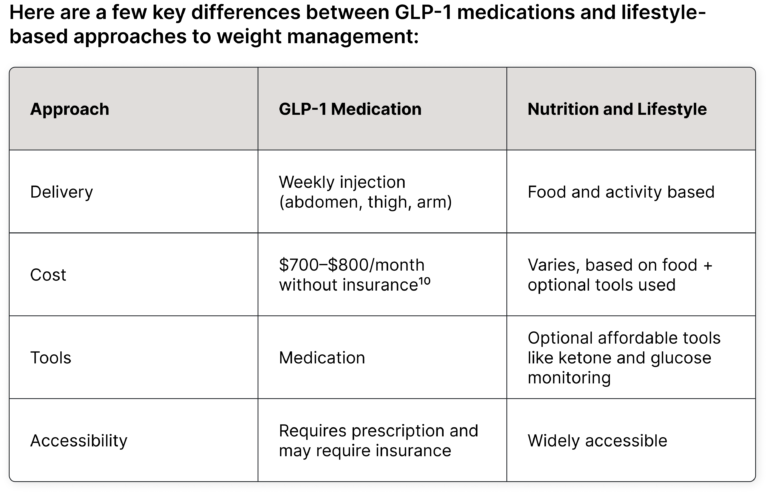
Comparing Cost and Accessibility: GLP-1 Medication vs Lifestyle Approach
When GLP-1 Medications May Still Make Sense
GLP-1 therapy can be an appropriate option in certain situations, including:
- Significant obesity
- Type 2 diabetes or other metabolic conditions
- When lifestyle approaches alone have not been sufficient
- As part of a broader strategy that includes sustainable dietary and lifestyle changes
For some individuals, these medications may serve as a starting point, with long-term success depending on how metabolic health is supported over time.
Questions to Ask Your Doctor Before Starting GLP-1 Therapy
If you are considering GLP-1 therapy, it may be helpful to discuss:
- Are there lifestyle approaches I should try first?
- How can I maintain lean mass during weight loss?
- What are the potential benefits and risks of GLP-1s in my case?
- How will I keep results if I stop the medication?
Finding a Sustainable Long-Term Approach
GLP-1 medications can be effective tools for weight loss, but they are not the only option. Approaches such as ketogenic or low-carbohydrate nutrition, intermittent fasting, and resistance training may help support fat loss while preserving muscle and improving long-term sustainability.
For many individuals, a more effective strategy is not simply to suppress appetite, but to support metabolic health and maintain those results over time.