

GLP-1 receptor agonists (also known as GLP-1 medications or simply GLP-1s) can be very effective for weight loss. But for many people, the challenge begins after stopping them.
Weight regain is common after discontinuing GLP-1 therapy. In a sub-analysis of more than 300 participants from a large clinical trial, individuals regained, on average, two-thirds of the weight they had lost within one year of stopping the medication. After discontinuation, appetite often returns, while the body remains adapted to a lower calorie intake. Without a clear strategy, maintaining the progress achieved during treatment can be challenging.
This reflects a key limitation: GLP-1 medications can reduce appetite and support weight loss, but they do not by themselves establish a long-term metabolic framework for maintaining that loss.
Why Weight Regain Happens
After weight loss – whether achieved with medication or not – the body undergoes several adaptations that can favor regain:
- Increased hunger signaling: The “hunger hormone” ghrelin typically rises, increasing appetite.
- Lower energy expenditure: Resting metabolic rate decreases with weight loss as the body adapts and both lean and fat mass are reduced.
- Loss of external support: Appetite suppression from medication is no longer present.
These changes can create a physiological environment that favors regaining weight unless dietary and lifestyle strategies are adjusted.
Why Keto Can Help After Stopping GLP-1s
A low-carbohydrate or ketogenic approach may help people maintain weight loss after discontinuing GLP-1 medication.
Reducing carbohydrate intake lowers insulin levels and shifts the body toward greater reliance on fat as a fuel source. This metabolic state is associated with more stable appetite, reduced reliance on frequent eating, improved glycemic control, and increased fat oxidation.
Rather than relying on medication to regulate intake, this approach allows for greater alignment between physiology and energy needs.
Emerging evidence supports this approach. A recent real-world study from Virta Health found that individuals with type 2 diabetes who discontinued GLP-1 therapy while continuing a ketogenic or low-carb diet maintained their weight loss over 12 months, with more than 70% sustaining at least 5% weight loss. Outcomes were similar to those who remained on GLP-1 therapy, and most participants maintained HbA1c below the diagnostic threshold for diabetes.
The Missing Piece: Monitoring Your Metabolism
For people who choose to follow a ketogenic or low-carb diet after stopping GLP-1 therapy, monitoring metabolic state can provide insight beyond body weight alone.
When carbohydrate intake is low and insulin levels are reduced, the body produces ketones as a byproduct of fat oxidation. Although ketones don’t measure fat loss directly, they can provide insight into whether the body is primarily using fat for fuel and has achieved a state of nutritional ketosis, which may provide metabolic health benefits in addition to weight loss.
Tracking ketones can offer a practical way to assess metabolic state during weight maintenance and help guide dietary adjustments.
A Practical Transition Plan Off GLP-1 Medication
A gradual and structured transition can help reduce the risk of weight regain.
Important: This is only an example. Be sure to work with your doctor to create an individualized plan.
Phase 1: During tapering
- Ensure adequate protein intake
- Adopt a sustainable low-carbohydrate or ketogenic diet and begin tracking ketones, along with glucose if you have diabetes or prediabetes
- Incorporate exercise, especially resistance training
Phase 2: First 4–8 weeks after stopping
- Expect appetite to increase
- Maintain regular, structured meals using keto-friendly recipes
- Continue monitoring metabolic trends
Phase 3: Long-term maintenance
- Use periodic tracking of your weight, ketones and/or glucose as needed
- Adjust food intake and activity based on your results
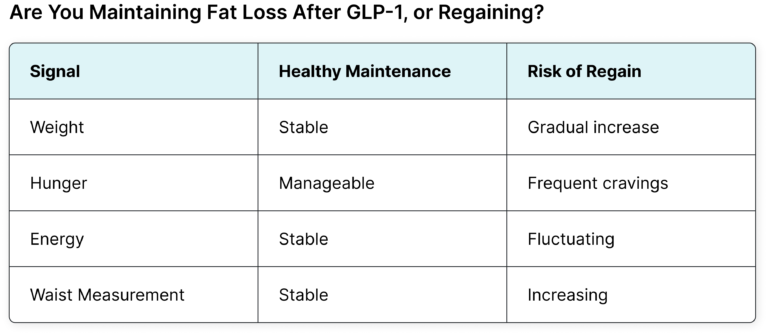
How to Know If You’re Maintaining Fat Loss
The Role of Muscle in Long-Term Success
Preserving lean mass is an important component of long-term weight maintenance. Muscle contributes to energy expenditure and metabolic health. When lean mass is lost during weight reduction, energy requirements decrease, which may make weight regain more likely.
Getting enough protein and doing resistance training can help preserve muscle and promote better outcomes over time, both during and after GLP-1 medication. Learn how to get enough protein and choose the right type of exercise for muscle maintenance.
Questions to Ask Your Doctor If You’re Thinking About Stopping GLP-1 Medication
If you are considering discontinuing GLP-1 therapy, it may be helpful to discuss:
- What is the best approach to tapering off?
- What dietary approach will best support maintenance during this transition?
- How can I minimize the risk of weight regain?
- How can I preserve lean mass?
- Would monitoring metabolic markers be helpful?
Navigating the Transition Off GLP-1 Therapy
Stopping GLP-1 medication is not simply the end of treatment; it is a transition.
Long-term success depends on how well metabolic health is supported during this phase, and beyond. A structured approach that includes ketogenic or low-carb nutrition, resistance training, and metabolic tracking may help maintain weight loss and promote long-term metabolic health.