
The carnivore diet has become increasingly popular as a simple, ultra-low-carbohydrate eating style that eliminates all plant foods (and sometimes dairy and eggs as well). Growing anecdotal evidence suggests this way of eating may support improvements in hunger and food cravings, energy, mental clarity, sleep, and overall perceived health. Additionally, this approach may benefit certain autoimmune conditions, such as inflammatory bowel disease, as shown in a case series of 10 patients with Crohn’s disease or ulcerative colitis who achieved clinical remission using an animal-based approach.
Although often viewed as extreme, the carnivore diet may be effective for some people, particularly those looking for simplicity and appetite control. However, it doesn’t always lead to optimal ketosis – defined as a beta-hydroxybutyrate (blood ketone) level between 0.5 and 5.0 mmol/L – unless it’s structured with that goal in mind. Understanding this can help people use carnivore more strategically and avoid common pitfalls.
Why Carnivore Works, Especially Early On
Carnivore often succeeds because it:
- Removes decision fatigue by eliminating most food choices
- Eliminates ultra-processed carbs by default
- Minimizing carbohydrate intake promotes satiety, particularly when fat intake is adequate
- Limiting carbs may quickly lower fasting insulin levels, particularly in insulin-resistant individuals
As a result, people may experience noticeable improvements in energy, mood, and cravings within days or weeks – reinforcing early motivation to continue.
Why Carnivore Diets Don’t Always Result in Ketosis
Even without carbohydrates, some people following carnivore have low ketone levels for one or more reasons.
High protein without enough fat is one of the most common factors. Many carnivore eaters rely heavily on lean meat, creating a high-protein, lower-fat diet that can increase insulin and suppress ketone production. In this scenario, people often end up with low glucose and low ketones, rather than the metabolic shift they expected.
High fat intake is a fundamental part of ketogenic eating. However, some carnivore advocates and influencers tend to underemphasize the importance of getting enough dietary fat to support consistent ketosis. While many people report feeling better on carnivore without achieving ketosis, those seeking neurological or metabolic benefits often need more fat than they realize.
Frequent eating can also limit ketosis. Grazing throughout the day can keep insulin elevated enough to reduce ketone production. Time-restricted eating or longer gaps between meals can make a noticeable difference for many people.
Finally, individual insulin sensitivity plays a major role. Two people can eat the same steak and have very different ketone responses. Without measuring ketones, both may assume they’re getting the same results.
Testing Without Undermining Simplicity
Carnivore has a strong appeal because it feels clear and uncomplicated: eat meat, and don’t overthink it. Introducing glucose and ketone testing can backfire if it’s seen as criticism or “rules.”
The most effective approach can be to view measurement as validation, not correction. Not “you’re doing it wrong,” but “let’s see what your metabolism is doing.” That subtle shift keeps the focus on outcomes rather than ideology.
A helpful reframe is: carnivore simplifies your inputs, and testing shows you the output.
Protein-Dominant vs. Ketogenic Carnivore
A practical way to reduce confusion is to recognize that carnivore can be implemented in different metabolic states:
- Protein-dominant carnivore tends to be higher in lean protein and lower in fat, which often results in low glucose and low ketones.
- Ketogenic carnivore prioritizes adequate fat, moderate protein, and often includes time-restricted eating, which makes higher ketone levels much more likely.
- For people interested in moderate to deep ketosis, the second pattern typically aligns more closely with the desired outcome.
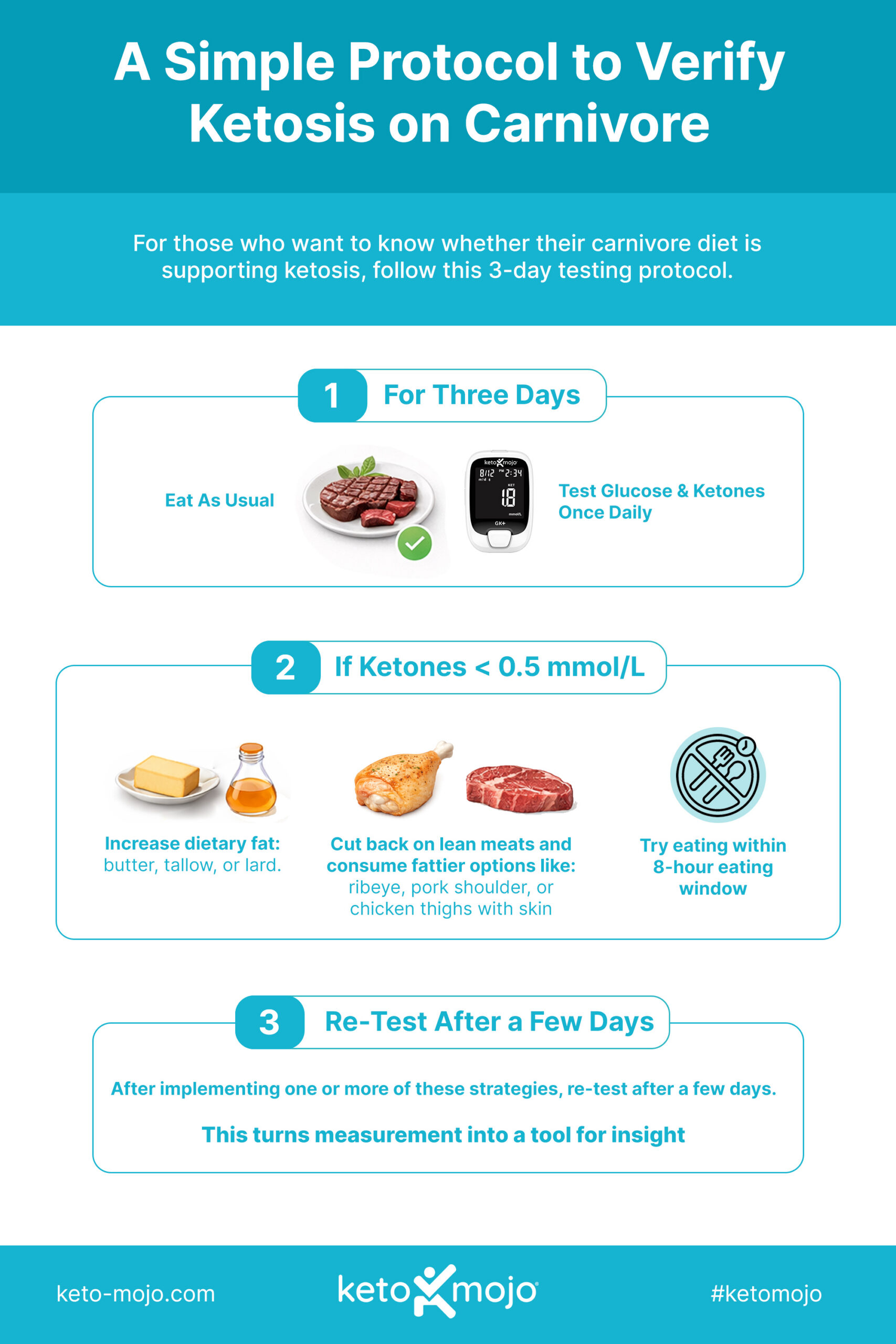
A Simple Protocol to Verify Ketosis on Carnivore
For those who want to know whether their carnivore diet is supporting ketosis, a brief testing protocol can offer helpful insight.
For three days:
- Eat as usual
- Test glucose and ketones once daily (ideally fasting or pre-meal, at least three hours after consuming any food)
If blood ketone levels are below 0.5 mmol/L:
- Increase dietary fat: e.g., add butter, tallow, or lard; consume the fatty meats suggested in the next bullet point
- Reduce protein slightly if needed: e.g., cut back on lean meats like chicken breast or tuna and replace with fattier options like ribeye, pork shoulder, or chicken thighs with skin
- Try eating within 8-hour eating window
After implementing one or more of these strategies, re-test after a few days.
This turns measurement into a tool for insight, not a source of pressure.
Why GKI Can Be a Helpful Metric
For those following a carnivore diet with goals like improved performance, symptom management, or achieving therapeutic levels of ketosis, the Glucose Ketone Index (GKI) can offer a more nuanced view than ketone levels alone. By reflecting the balance between glucose and ketones, GKI shifts the emphasis from strict dietary rules to actual metabolic outcomes. This perspective helps bridge the gap between keto and carnivore approaches and supports a more individualized, results-focused mindset.
The Bottom Line
Carnivore can be a powerful entry point into low-carb living. It simplifies eating, reduces cravings, and often helps people feel better quickly. But it doesn’t always produce ketosis, especially if protein intake is high, fat intake is low, meals are frequent, and/or insulin sensitivity is compromised.
With the right framing, measuring glucose and ketones isn’t a challenge to carnivore. It’s a way to validate results and optimize outcomes. Carnivore may bring people close to ketosis, but measurement is what confirms whether they’re truly there.
Here are three recipes that support a ketogenic lifestyle while following a carnivore diet: