GLP-1 receptor agonists (often referred to as GLP-1 medications or simply GLP-1s) have changed the landscape of obesity and diabetes care. By reducing appetite and slowing gastric emptying, these medications can lead to significant weight loss.
But there’s an important nuance that often gets overlooked: weight loss is not the same as fat loss.
When appetite is significantly suppressed, it becomes easy to under eat calories, protein, and essential nutrients. Over time, this can lead to loss of lean mass, reduced metabolic rate, and suboptimal body composition outcomes.
Understanding how to support your metabolism while appetite is low is key to getting the most benefit from GLP-1 therapy.
Appetite Suppression vs. Meeting Nutrition Needs
GLP-1 medications reduce hunger, but they don’t eliminate your body’s physiological requirements.
Even if you don’t feel hungry, your body still needs:
- Adequate protein to maintain muscle
- Enough energy to support metabolic function
- Essential vitamins and minerals
When intake – especially protein – drops too low, the body may begin breaking down muscle tissue to meet its needs.
This is where problems can arise. The number on the scale goes down, but the composition of that weight loss may not be ideal. Over time, this may contribute to sarcopenia: age-related muscle loss associated with reduced physical function, increased risk of falls, and other adverse health outcomes.
Why Muscle Loss Can Happen on GLP-1s
Several factors can contribute to lean mass loss during GLP-1–induced weight loss: reduced total calorie intake, inadequate protein intake, and lack of resistance training.
Clinical trials of GLP-1 receptor agonists consistently show that a sizable portion of weight loss often comes from lean mass. Some studies report that between 15–60% of the total weight lost is lean mass, with skeletal muscle accounting for approximately half of this amount. A 2025 meta-analysis of 22 randomized trials found that, on average, about 25% of the weight lost during GLP-1 therapy was from lean mass.
This is not unique to GLP-1 medications; it can occur with other forms of weight loss. However, the degree of appetite suppression with these medications may increase the risk if diet is not structured intentionally.
This raises an important question: how can lean mass be better preserved during weight loss? Although more research is needed, emerging evidence suggests that well-formulated ketogenic diets may help prevent loss of muscle in people who are actively losing weight.
Can You Combine GLP-1 Medication with Keto?
Yes, but it requires careful planning.
Because GLP-1 medications suppress appetite, combining them with a ketogenic diet can increase the risk of undereating, since ketogenic approaches may further reduce hunger.
However, when structured properly, a well-formulated ketogenic diet with adequate protein and exercise may support lean mass preservation.
This is partly due to the diet’s effects on fuel utilization. When carbohydrate intake is low and insulin levels are reduced, the body increases fat burning and produces ketones as an alternative fuel source. Although ketones are not a measure of body composition, they can serve as a proxy for fat burning and provide insight into how the body is using energy during weight loss, including during GLP-1 therapy.
But it’s very important to avoid turning keto into unintentional starvation. The goal is not to eat as little as possible; it’s to provide your body with adequate protein and other essential nutrients while supporting a fat-burning state.
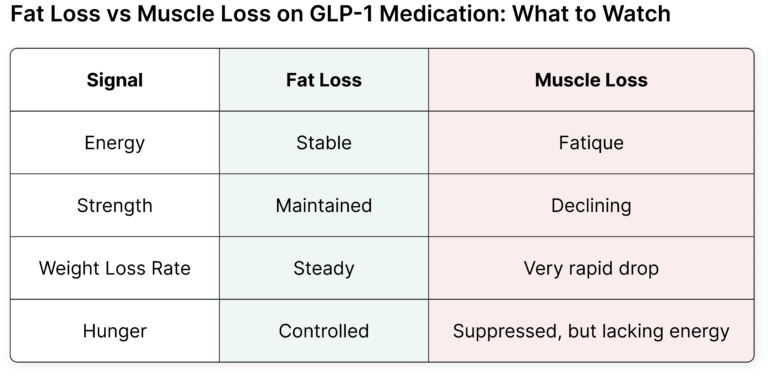
How to Know If You’re Losing Mostly Fat
The scale doesn’t always tell you what kind of weight you’re losing. Even when body fat estimates are available, they may not fully capture changes in muscle mass. Instead, look at patterns across multiple signals:
How to Structure Your Ketogenic Lifestyle on GLP-1 Medication
To optimize fat loss while preserving muscle, focus on the following:
1. Prioritize protein
Adequate protein intake is essential to preserve lean mass. Most individuals will benefit from consuming 1.2–2.0 grams of protein per kilogram of reference body weight, adjusted for activity level and clinical context.
Learn how to make sure you’re getting enough protein.
2. Avoid “accidental fasting”
It’s easy to go long periods without eating on GLP-1 medications. While intermittent fasting can be beneficial in some contexts, chronic under-fueling is not.
3. Use keto intentionally
A ketogenic approach can support fat loss and metabolic health, but it should:
-
- Contain the amount of protein needed to preserve lean mass
- Provide healthy fat (on keto, fat becomes your body’s main fuel source)
- Be based on whole, minimally processed foods
- Not be excessively low in calories
- Provide adequate hydration and electrolytes
Learn how to follow a well-formulated ketogenic diet
4. Engage in resistance training
Lifting weights or performing other strength-training exercise may also be helpful. In a recent case series, individuals who combined GLP-1 therapy with resistance training and adequate protein intake were able to preserve lean mass during significant weight loss.
Questions to Ask Your Doctor
If you’re using a GLP-1 medication, it’s worth having a conversation about how to optimize your results.
Consider asking:
- How can I minimize lean mass loss while on GLP-1 therapy?
- What protein intake should I target?
- Is combining GLP-1 medication with low-carb or keto appropriate for me?
Putting It All Together
GLP-1 medications promote weight loss, but without a structured approach, they may also increase the risk of muscle loss.
Prioritizing protein, resistance training, and a well-formulated low-carbohydrate or ketogenic approach can help promote fat loss while preserving lean mass. The goal is not just weight loss, but maintaining metabolic health over time.