Diabetes
Greater reduction in the proinsulin-C-peptide ratio with a ketogenic vs control diet in patients with type 2 diabetes
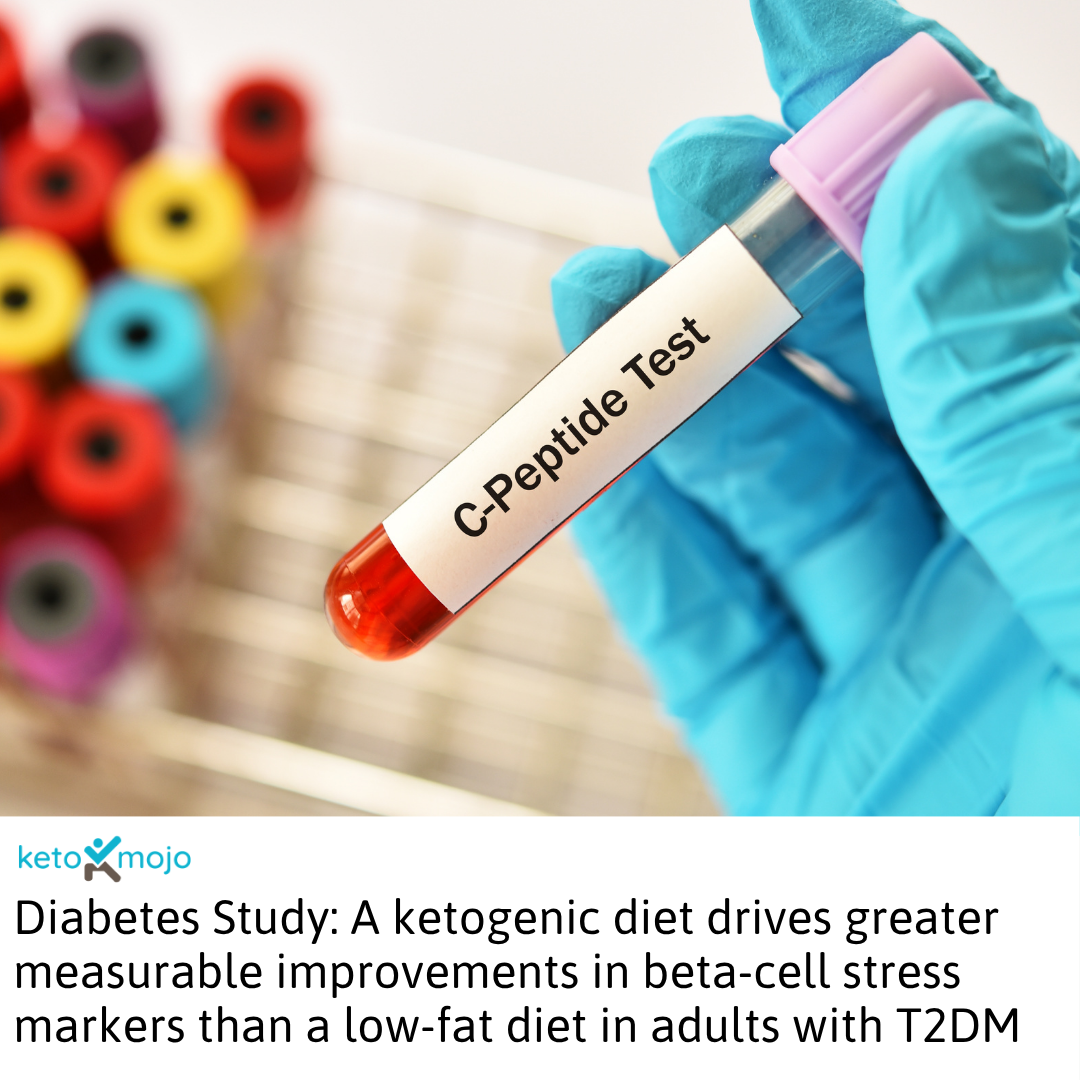
This randomized controlled trial evaluated whether a ketogenic diet (KD) reduces beta-cell stress to a greater extent than a low-fat diet (LFD) in adults with type 2 diabetes (T2D). Beta-cell dysfunction plays a central role in T2D progression, and the proinsulin-to-C-peptide ratio (PICP) is a useful marker of beta-cell stress, with higher values indicating impaired insulin processing.
Fifty-one adults with T2D averaging 55 years in age were randomized to a KD (~9% carbohydrate, 65% fat) or LFD (~55% carbohydrate, 20% fat) for 12 weeks. The diets were designed to maintain body weight, allowing the effects of macronutrient composition to be assessed without the confounding influence of weight loss. Participants received all foods and met weekly with a dietitian.
Beta-cell function was assessed using a multi-phase hyperglycemic clamp, including fasting and post-challenge PICP as well as acute and maximal C-peptide responses.
Key Findings:
- Fasting beta-cell stress (PICP₀)
-
- Approximately 56% greater decrease with KD compared to LFD
-
- Post-challenge beta-cell stress (PICP₁₉₀)
-
- Approximately 49% greater decrease with KD compared to LFD
-
- Beta-cell function relationships
-
- Reductions in PICP were associated with improvements in insulin secretion
- Change in acute C-peptide response correlated with changes in PICP₀
- Decreases in PICP₁₉₀ were also associated with increases in maximal C-peptide response
-
- Weight-independent findings
-
- Body weight remained stable and was not associated with changes in PICP, suggesting that effects were driven by dietary composition rather than weight loss
-
Conclusion
A ketogenic diet reduced beta-cell stress to a greater extent than a low-fat diet in adults with type 2 diabetes, as reflected by larger reductions in PICP. Because body weight was maintained, the findings suggest that carbohydrate restriction itself – rather than weight loss – may play a direct role in improving beta-cell function. Further research is needed to determine whether these effects translate into long-term preservation of beta-cell health.
 Source: Journal of the Endocrine Society