

There’s a buzz about intermittent fasting in the news and on social media. It seems everyone is doing it. But what is it exactly? Is it safe? What are its health benefits? Does it speed up keto progress? Is it worth doing? Let’s demystify the practice so you can confidently answer these questions and determine whether intermittent fasting is right for you.
What is Intermittent Fasting
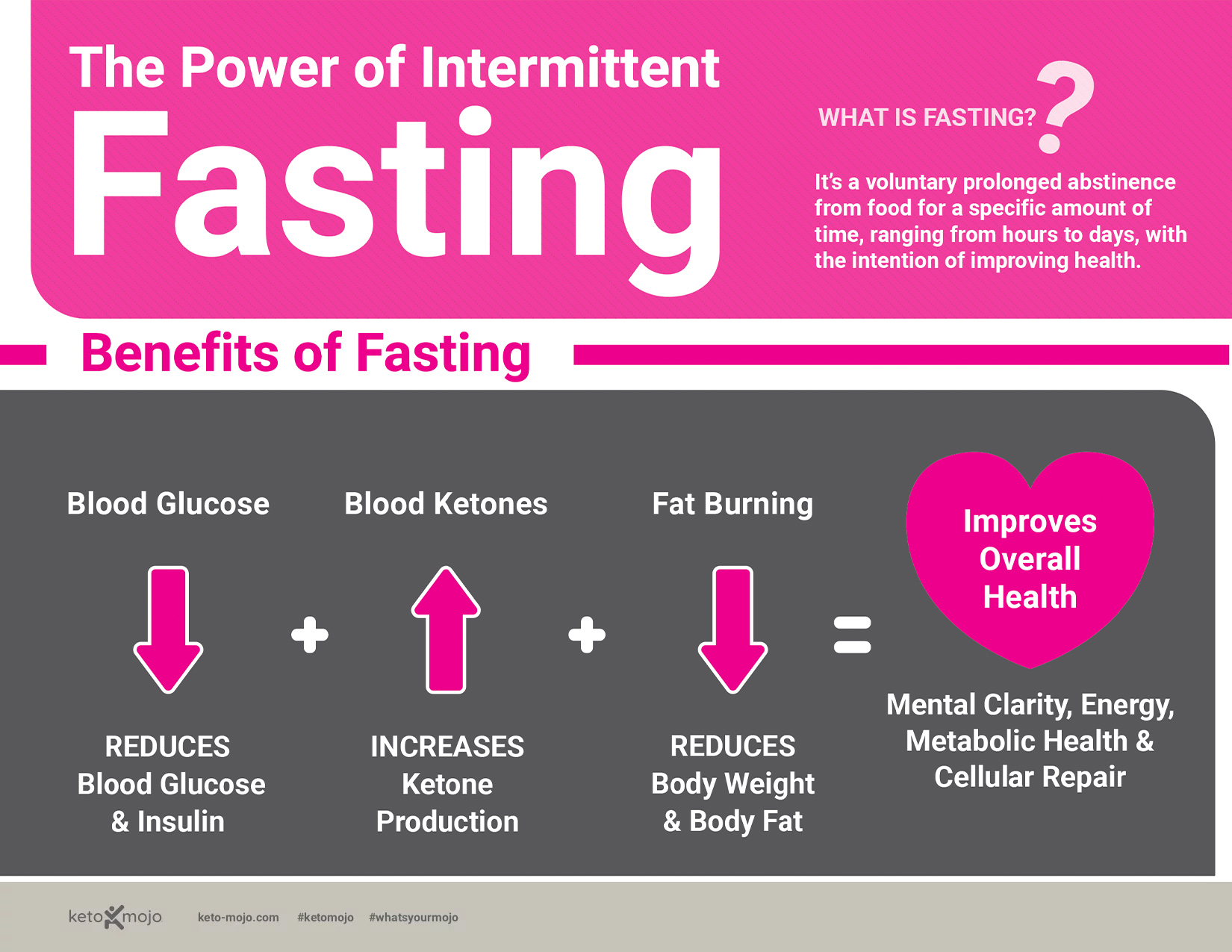
Fundamentally, fasting is more than just planning to skip breakfast. It’s a voluntary prolonged abstinence from food for a specific amount of time, ranging from hours to days, with the intention of improving health.
Though intermittent fasting is a white-hot trend in the health and fitness world, it’s not a remotely new concept. Fasting has been practiced for thousands of years in Christianity, Judaism, Islam, Buddhism, Hinduism, and native tribal religions/spirituality, and beyond as a ritual to heal the body and soul, as a form of penance/sacrifice, and to purify. (Think Ramadan for Muslims, Uposatha for Buddhists, and Ash Wednesday and Good Friday for the Roman Catholic Church.) But fasting has also always had clinical health-related appeal to physicians and philosophers, dating as far back as the times of Hippocrates, Plato, Socrates, and Aristotle.
Hippocrates, generally regarded as the father of medicine, said, “Everyone has a doctor in him or her; we just have to help it in its work. The natural healing force within each one of us is the greatest force in getting well. Our food should be our medicine. Our medicine should be our food. But to eat when you are sick, is to feed your sickness.” This quote embodies the core philosophy of the keto diet: Feed your body food that promotes health. It also nods to the role of fasting to help fight sickness and promote wellness.
Intermittent fasting, or alternating cycles of fasting and eating, is a way of making fasting an ongoing part of a health-focused lifestyle. We’ll discuss how and for how long below, but first let’s explore the benefits.
What are the Benefits of Intermittent Fasting
Many of the benefits attributed to intermittent fasting are the same ones experienced by people who eat ketogenic diets. If used in conjunction with a keto lifestyle, fasting may heighten the benefits you’re already getting.
- Body fat loss: Systematic reviews of clinical trials––considered the strongest level of evidence ––demonstrate that intermittent fasting can lead to significant loss of body fat.
- Improved metabolic health: Strong evidence shows that intermittent fasting can improve insulin sensitivity and reduce blood pressure, blood glucose, and triglyceride levels.
- Reduction in oxidative stress and inflammation: Some studies show that fasting can lower levels of oxidative stress and inflammation in people with overweight or obesity.
- Autophagy: Research demonstrates that fasting triggers autophagy, a process where cells remove old or damaged components, promoting cellular repair, although more studies are needed to determine its impact on human health and longevity.
- Enhanced cognitive function: Emerging research suggests that intermittent fasting may boost brain health, in part by increasing levels of brain-derived neurotrophic factor (BDNF), which supports cognitive function and may reduce the risk of neurodegenerative diseases like Parkinson’s and Alzheimer’s.
It’s important to point out that some studies haven’t shown unique benefits from intermittent fasting compared to calorie restriction. It’s also notable that most trials have been conducted in people who were not eating low-carb or ketogenic diets.
How to Intermittent Fast
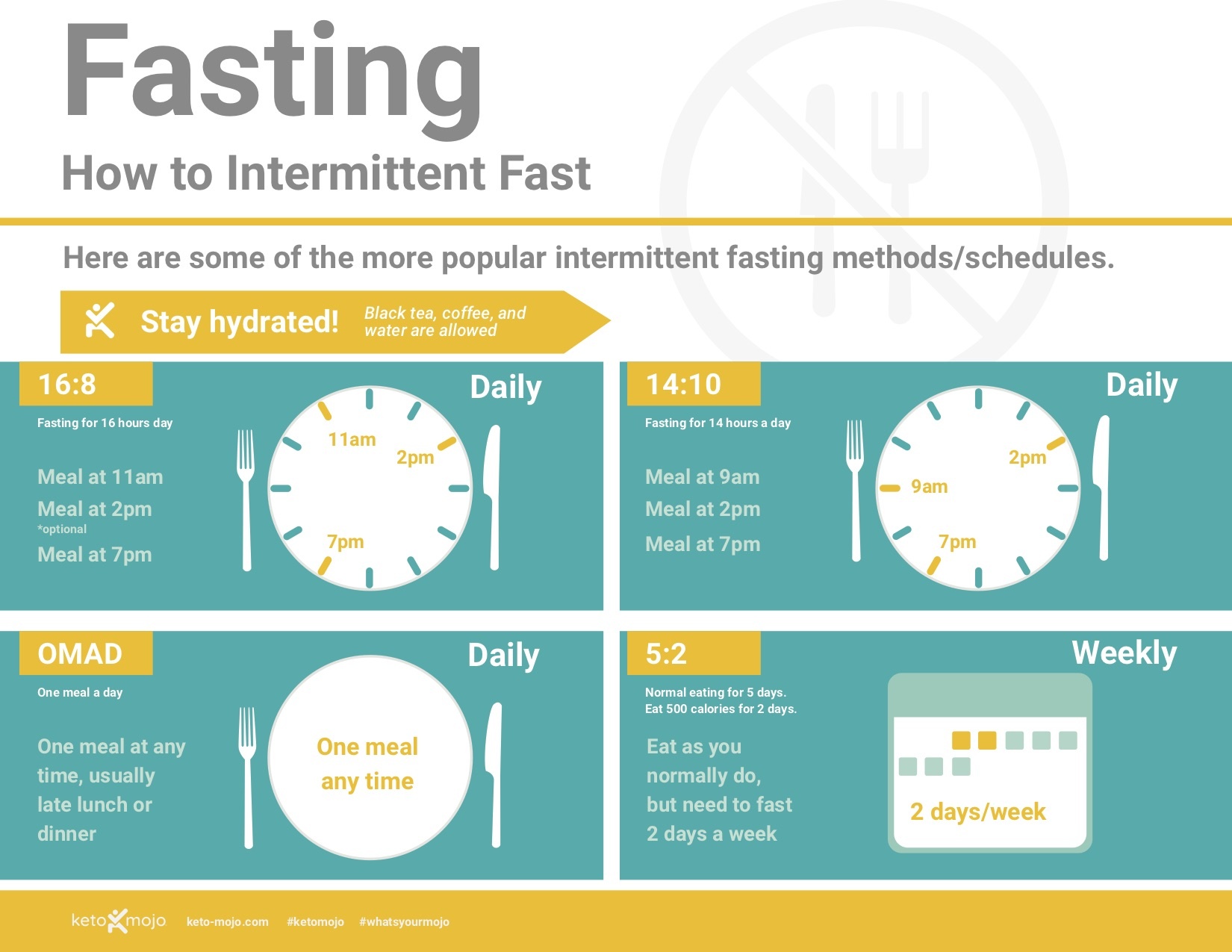
Intermittent fasting involves cycling between periods of eating and fasting, and it can be tailored to fit your lifestyle. These are the most common types:
- 16:8 (16 hours fasting per day followed by eating within an eight-hour window)
- 14:10 (14 hours fasting per day followed by eating within a ten-hour window)
- OMAD (one meal a day)
- 5:2 (eating 5 days per week, then conducting a partial fast for 2 days)
Let’s break these intermittent fasting plans down.
The 16:8 method of intermittent fasting involves fasting for 16 hours and then consuming your meals/macronutrients during an eight-hour period. During this time, it’s suggested to eat lower-glycemic foods such as vegetables, meats, fish, eggs, nuts, and dairy. The 14:10 method is similar: You go 14 hours without eating, then eat low-glycemic meals during a ten-hour period. During both the 16:8 and 14:10 methods you should be able to fit two or three meals.
For the one meal a day (OMAD) method of fasting, you eat only one meal a day and fast until the next day’s meal. This means you are getting all of your daily calories, vitamins, and minerals in that one meal.
With 5:2 intermittent fasting, you eat 5 days of the week and eat 500 to 600 calories for the remaining 2 days.
For each of these diet-plan options, you are allowed to drink black tea, black coffee, and water during the fasting state. This helps to keep you hydrated and may also help ward off hunger. Some fasting advocates suggest that you can add up to 50 calories of cream or other additions to your water, coffee, or tea without breaking your fast.
See the timelines below for example fasting schedules. But note that fasting is very personal and you need to take your own bio-individuality into consideration when determining what works for you.
Tips For Intermittent Fasting
If you’re considering fasting, we recommend you heed the following advice:
- Consult your healthcare provider or dietitian before making any dietary changes, whether you have type 2 diabetes, medical risk factors, or consider yourself optimally healthy. This is especially important if you take medication.
- Make sure to stay properly hydrated during fasting periods.
- To mitigate possible side effects, ensure you obtain adequate electrolytes (sodium, potassium, magnesium) each day regardless of intermittent or extended fasting.
- Feel free to experiment with different fasting times to see what works best for you.
- Eat OMAD no more than three times a week in order to ensure adequate intake of protein and other essential nutrients.
- Start slowly! Try intermittent fasting one day a week and slowly work up to the number of days a week you would like to implement intermittent fasting.
- When you’re in the eating window/feeding state, choose low-glycemic (foods low in carbohydrates or sugars) and nutritious foods that provide protein, fiber, minerals, and vitamins to maintain optimal health.
- For optimal results, pair intermittent fasting with your low-carb or ketogenic lifestyle, which naturally uses fat for fuel in a similar way that fasting does.
How Long Should You Fast
The duration of any intermittent fast is based on your individual desires, needs, and body. It can be done one day or a few days per week or for as long as you like and as long as it feels right for you.
If you’re new to intermittent fasting, start out by fasting for 10 to 16 hours two days a week, then see how you feel. Depending on your goals, you may want to step this up to five days a week or even seven days a week.
Extended Fasting
Extended fasting is going for 24 hours or more on a “wet” fast (liquids only). While fasting days may have therapeutic benefits (to address cancer, obesity, and neuroprotective properties), the research is still in its infancy and this type of fasting is not for the newbie. Dr. Jason Fung, one of the most cited physicians around fasting and the author of The Complete Guide to Fasting, explains why: “Instead of undertaking shorter fasts and gradually extending it, [people new to fasting] immediately opt for a full on water-only extended fast. This is like a rookie mountaineer that decides that he/she will tackle Mount Everest, without oxygen and push on to the summit regardless of weather.”
IMPORTANT: Extended fasts should only be done under medical supervision with the use of monitoring through blood tests, urinalysis, and physician physical exams and supplementation of vitamins, minerals, and hydration.
Who Should Not Fast
Fasting isn’t for everyone, especially people who are:
- Underweight with a BMI of 18.5 or less (no need to burn fat or lose weight)
- Malnourished
- Children
- Pregnant
- Breastfeeding
- Hypoglycemic
- Experiencing eating disorders
Note: While intermittent fasting can be beneficial for people with diabetes, it’s best to work closely with your healthcare provider to ensure that it’s implemented in a safe and healthy way.
Inspiration for You if You Want to Fast
Want to try intermittent fasting but worried you can’t handle extended periods without food? You may want to reframe your thinking. In his book, Dr. Fung makes a great point: “We talk a lot about what you should eat and what you shouldn’t eat. But people never talk about meal timing — making sure you have long periods where you’re not eating. Look at the word ‘breakfast’ in English. That’s “break fast.” That’s the meal that breaks your fast. This implies that fasting is a part of everyday life. We’ve forgotten that. We think it’s some sort of Herculean effort, but it’s not. We should be fasting every day.”
Want more info? Watch this quick video explaining ketosis and fasting.