Psychiatric Disorders
Ketogenic Diets and Depression and Anxiety: A Systematic Review and Meta-Analysis
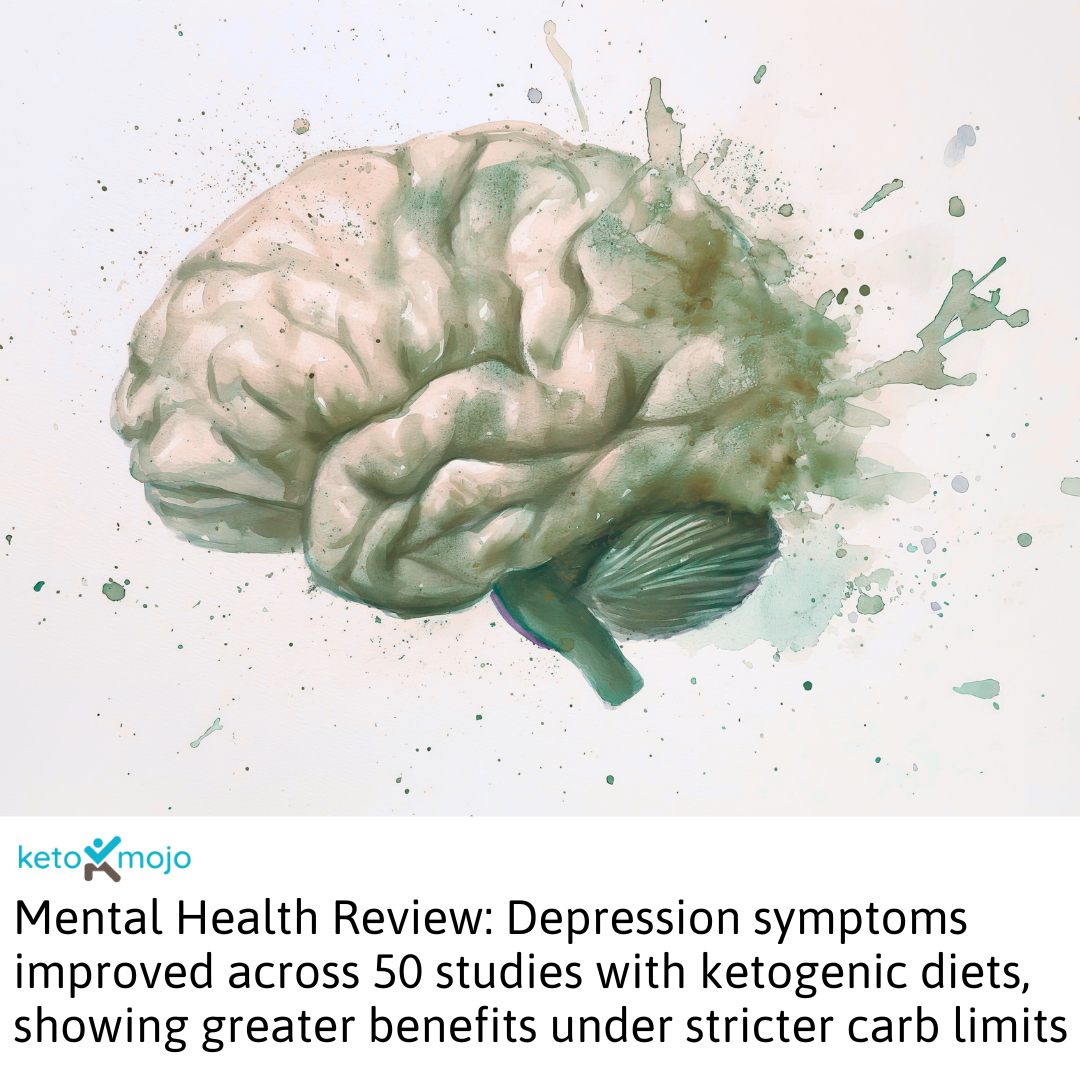
This systematic review and meta-analysis evaluated the effects of ketogenic diets (KDs) on depressive and anxiety symptoms in adults. KDs are high-fat, low-carbohydrate, moderate-protein diets that induce nutritional ketosis, a metabolic state thought to affect brain function via mitochondrial support, reduced inflammation, and altered neurotransmission.
Fifty studies involving 41,718 adults were included, covering randomized trials, quasi-experimental designs, observational studies, and case reports. All used validated psychiatric scales to assess changes in depression or anxiety following a ketogenic diet (defined as <50 g/day or <26% of energy from carbohydrates). Meta-analyses were conducted separately for randomized controlled trials (RCTs,) and quasi-experimental studies (QSEs), with results expressed as standardized mean differences (SMDs).
Results for Depression:
RCTs:
- KDs were associated with a small to moderate reduction in depressive symptoms (SMD −0.48).
- Effects were larger when ketosis was biochemically verified (SMD −0.88).
- Non-obese participants showed greater symptom reduction (SMD −0.88) compared to obese participants (SMD −0.11).
- Very low-carbohydrate diets had stronger effects (SMD −0.79) than moderately low-carbohydrate diets.
- Studies using high-carbohydrate control diets showed weaker associations.
QSEs: - Moderate improvements in depressive symptoms were observed overall (SMD −0.66).
- Effects were consistent across subgroups, regardless of ketosis monitoring, comorbidities, or intervention duration.
Results for Anxiety:
RCTS:
- No significant overall effect of KDs on anxiety symptoms (SMD −0.03).
- Subgroup analyses did not identify factors that modified this result.
QSEs: - Moderate reductions in anxiety symptoms were found (SMD −0.58).
- Effects were consistent across various participant groups and intervention designs.
Ketogenic diets were linked to modest reductions in depressive symptoms in RCTs and larger effects in quasi-experimental studies. Benefits were greater with verified ketosis, stricter carbohydrate restriction, and in non-obese participants. Evidence for anxiety was mixed in RCTs but more positive in QSEs. Future trials should use standardized protocols, biochemical monitoring of ketosis, and extended follow-up to clarify effectiveness in psychiatric populations.
 Source: JAMA Psychiatry