Diabetes, Cardiovascular Disease
Coronary Artery Calcification in Type 1 Diabetes After 10-Year Ketogenic Diet
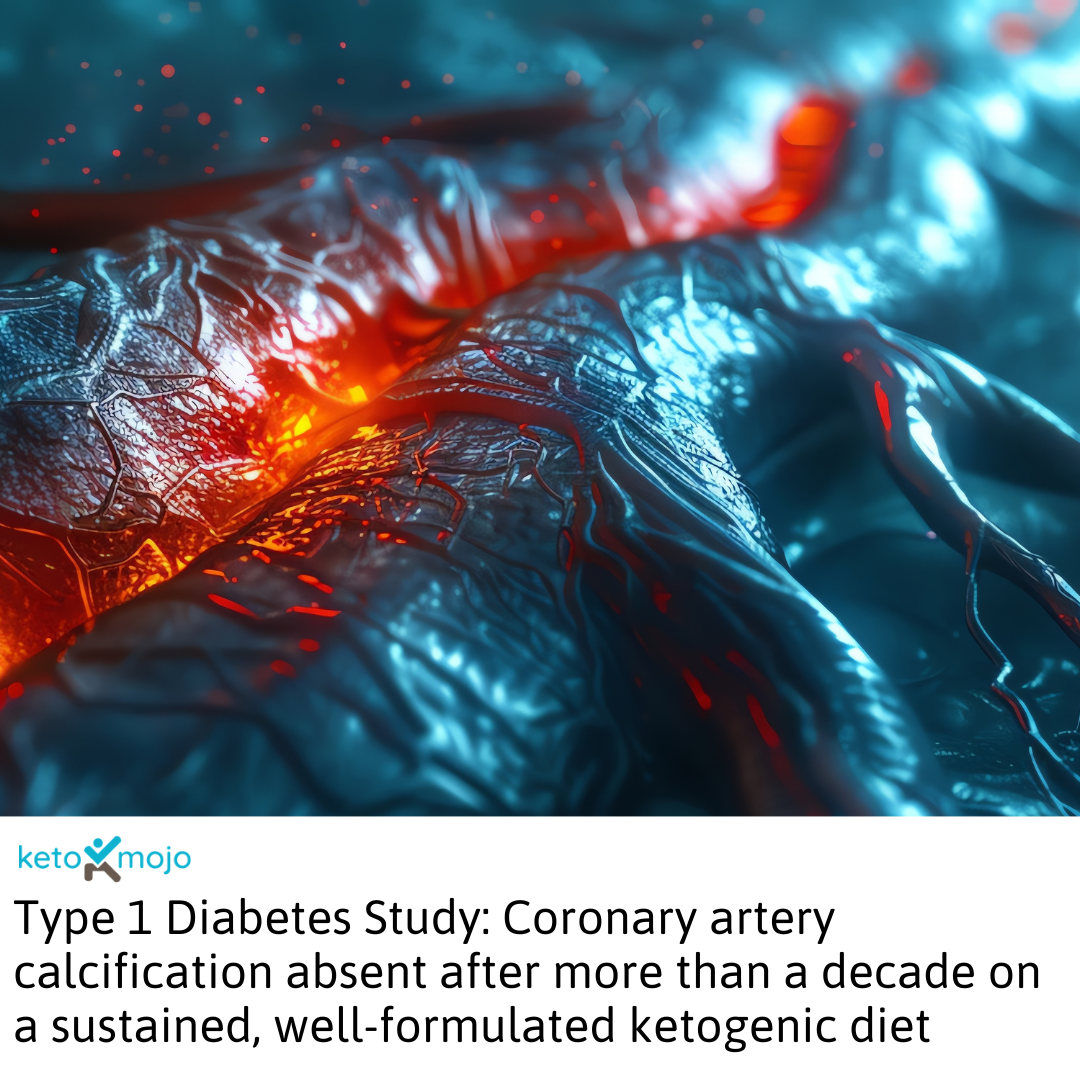
This case report presents the first known coronary artery calcium (CAC) imaging data from an individual with type 1 diabetes (T1D) following a long-term ketogenic diet. Cardiovascular disease remains the leading cause of death in T1D, and CAC scoring is a well-established method for identifying subclinical atherosclerosis and predicting future cardiovascular risk.
The subject was a 33-year-old male diagnosed with T1D at age 16. He followed a well-formulated ketogenic diet for over 10 years, consuming an average of 49 grams of net carbohydrates per day (approximately 7% of total energy), with 24% of energy from protein and 64% from fat—including 65 grams of saturated fat daily. His dietary intake came primarily from whole, minimally processed foods.
In addition to nutritional therapy, he maintained a high level of physical activity—averaging 577 minutes per week of moderate-to-vigorous aerobic and resistance training. His body fat percentage was 9.8%, and his insulin requirements were reduced by 43% compared to his pre-ketogenic diet regimen. Glycemic control was consistently excellent, with an HbA1c of 5.5% during the ketogenic period.
Additional cardiometabolic data collected in earlier assessments showed normal or favorable endothelial function, arterial stiffness, and heart rate variability, suggesting preserved vascular health despite the presence of elevated LDL-C (129 mg/dL). He was not on lipid-lowering medication.
At year 11 of his ketogenic diet, a coronary CT scan was performed to assess CAC. Imaging revealed a CAC score of 0 across all coronary artery territories, including the left main, LAD, circumflex, and right coronary arteries.
This case challenges the assumption that elevated LDL-C in isolation is a reliable predictor of atherosclerotic disease in individuals following a well-formulated ketogenic diet. It also suggests that sustained nutritional ketosis, combined with overall metabolic health, may help reduce or delay coronary artery calcification in T1D. However, as a single case report, broader conclusions cannot be drawn. Larger, controlled studies are needed to assess whether carbohydrate-restricted diets can reduce atherosclerotic progression in this population.
 Source: Journal of Applied Physiology