 Julia Tulipan
Something I see almost every day in my work with clients is this: people are following a ketogenic diet, they’re diligent about avoiding carbs, and they’re eating plenty of fat — yet they’re not seeing the results they hoped for. The weight isn’t moving, the cravings are still there, or they feel sluggish and hungry. And when we look closer, the culprit is almost always the same: too little protein and too much fat.
It’s one of the most common — and most damaging — mistakes people make on keto. Many believe they need to hit a 4:1 fat-to-protein ratio because that’s what they read online or saw in a keto calculator. What they don’t realize is that this recommendation comes from a therapeutic ketogenic diet designed for epilepsy treatment, not for fat loss, metabolic health, or everyday nutrition.
For most people, such a high fat intake is unnecessary — and counterproductive. In fact, shifting your focus toward protein and letting fat play a supporting role can transform how you feel and how well keto works for you, especially if losing body fat is your goal. Let’s break down why.
The Origin of the 4:1 Myth — And Why It Doesn’t Apply to You
The “4:1 ratio” refers to a diet where for every 4 grams of fat, there is only 1 gram of combined protein and carbohydrate. This approach was originally developed in the 1920s as a medical therapy for children with epilepsy, where maintaining extremely high levels of ketones was necessary to control seizures. It was — and still is — a highly specialized dietary intervention used under medical supervision.
But somewhere along the way, this concept made its way into mainstream keto communities. Now, many people mistakenly believe that unless their plate is drenched in butter and oil, they’re “not doing keto right.” They end up force-feeding fat in pursuit of deep ketosis, even though their goal isn’t seizure management — it’s fat loss, better energy, or improved metabolic health.
Here’s the truth: You don’t need a 4:1 ratio to be in ketosis. Most people do perfectly well when consuming moderate protein and enough fat to provide taste and satiety, depending on their individual goals and activity levels. And if you have body fat to lose, your own stored fat can — and should — provide much of the energy you need. But that only works if you don’t overeat dietary fat in the first place.
Why Protein Is the Most Underrated Macronutrient on Keto
Let’s be clear: protein isn’t just “important” — it’s essential. It’s far more than a muscle-building nutrient. Protein is the cornerstone of nearly every structure and process in your body, and getting enough of it is one of the most impactful things you can do for your health and your results on keto.
Here’s why:
1. Protein Is the King of Satiety
If you’re struggling with hunger on keto, protein is almost always the missing piece.
Gram for gram, protein is the most satiating macronutrient. It stimulates powerful satiety hormones like PYY (peptide YY) and GLP-1, while helping regulate ghrelin, the hormone that drives hunger. It also slows down gastric emptying, keeping you fuller for longer.(1)
In practical terms, this means that meals rich in protein naturally reduce appetite and make it far easier to eat less — without counting calories or relying on willpower. It’s one of the reasons why high-protein diets consistently outperform low-protein ones for fat loss.
2. Protein Protects Lean Muscle — and Your Metabolism
When you lose weight, the goal isn’t just to lose weight — it’s to lose fat while preserving lean mass. Protein is key to that.
Your muscles are not just for movement; they’re metabolically active tissue. The more muscle you have, the higher your resting metabolic rate (RMR) — meaning you burn more calories even when you’re not exercising. Losing muscle during weight loss slows your metabolism and makes weight regain more likely.
Adequate protein intake helps maintain muscle mass, especially during a calorie deficit. Combined with resistance training, it even allows you to build lean tissue while burning fat — a powerful body recomposition effect that’s virtually impossible without enough protein.(2)
3. Protein Is the Body’s Master Builder
Every cell in your body relies on amino acids — the building blocks of protein. They are used to produce enzymes, hormones, neurotransmitters, antibodies, and countless other molecules essential for life. Without sufficient protein, your body literally lacks the raw materials it needs to repair, regenerate, and function optimally.
This isn’t just about muscles. It’s about your immune system, your hormones, your skin, your hair, your mood, your energy — everything. If you chronically under-eat protein, you’re not just limiting your physique goals. You’re limiting your health.
Fat: Essential, Yes — But Not Unlimited
At this point, you might wonder: “So should I avoid fat?” Absolutely not. Fat is still a vital nutrient. It’s essential for hormone production, cellular structure, nutrient absorption, and energy — and it’s a core part of a ketogenic diet. It will provide the majority of your energy needs.
But more fat isn’t always better. And here’s the key insight most people miss: Your body doesn’t care whether fat comes from your plate or your hips.
If you’re consuming large amounts of dietary fat, your body has no reason to dip into its fat stores for energy. But if you supply enough fat to support your basic needs and allow a small energy gap, your body will gladly make up the difference by burning stored body fat.
This is how fat loss works. Overeating fat on keto stalls that process — even if you’re technically “in ketosis.” The ketones might still be there, but they’re coming from the fat you ate, not the fat you wanted to lose.
How Much Protein (and Fat) Do You Really Need?
There’s no one-size-fits-all formula, but here are some science-backed guidelines you can use as a starting point:
- Protein: Aim for about 1.2–2.0 grams per kilogram of body weight (or reference body weight if you are carrying excess weight) per day.
-
- Example: If you weigh 70 kg (154 lbs) or this is your reference body weight, that’s about 84–140 g of protein per day.
- Go toward the higher end if you’re older, active, or trying to lose weight.
-
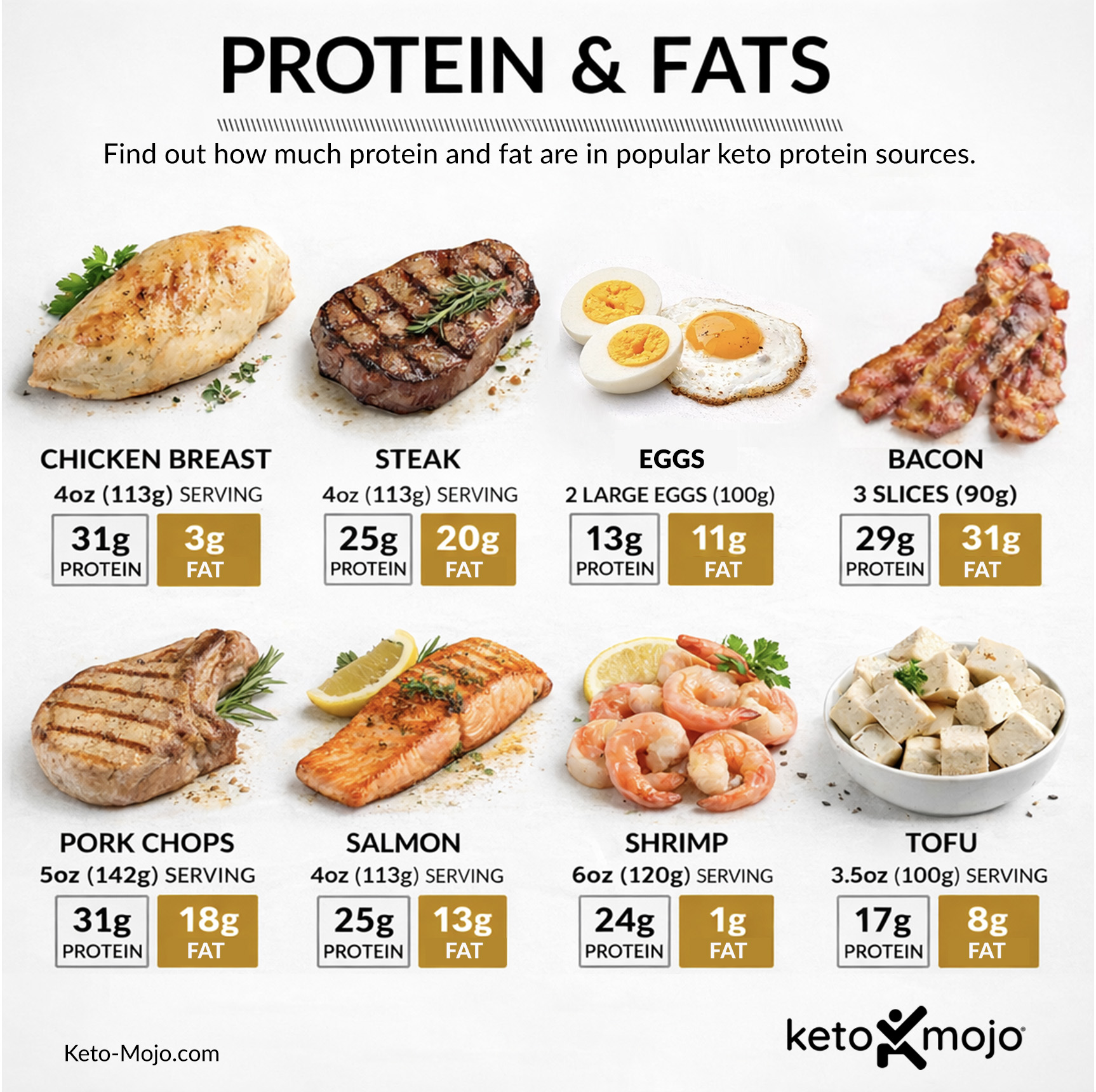
- Fat: Eat enough to feel satisfied and maintain hormonal balance — but don’t force it. Let hunger guide you once your protein needs are met. Aim for at least 100 g of fat per day and work your way up from there.
A good rule of thumb is to build your meals around protein-rich foods (meat, fish, eggs, dairy, etc.) and then add fat to taste, rather than trying to hit an arbitrary fat target.
If you have significant body fat to lose, remember this: your stored fat is your “internal energy source.” You don’t need to supply all your energy through dietary fat — your body already has a built-in reserve.
Common Keto Myths About Fat — Busted
Let’s clear up a few persistent myths that keep people stuck:
Myth 1: “I need to add fat to everything to stay in ketosis.”
Reality: Ketosis is a result of low carbohydrate availability and your body using fat for fuel — not of how much fat you eat. You can be in ketosis while burning stored body fat even if dietary fat is moderate.
Myth 2: “More fat = more ketones = better results.”
Reality: High ketone levels don’t automatically mean more fat loss. They often just mean you’re eating more fat. Sustainable fat loss is about mobilizing stored fat, not constantly flooding your body with large amounts of dietary fat.
Myth 3: “Low protein is necessary to stay in ketosis.”
Reality: While extremely high protein intake can slightly reduce ketone production, most people remain in ketosis even with ample protein. And even if ketone levels are a bit lower, the metabolic benefits — improved satiety, muscle maintenance, and fat loss — far outweigh the difference.
The Real Keto Sweet Spot: Protein-Focused, Fat-Supported
For people who want to lose fat and improve body composition, the most effective ketogenic diets aren’t necessarily the ones highest in fat — they’re the ones that are protein-sufficient, nutrient-dense, and tailored to your body’s needs. That means:
- Prioritize protein — Hit your protein target first.
- Add fat for satiety — Use fat as a tool, not a goal.
- Let your body burn stored fat — Don’t out-eat your energy needs.
This approach doesn’t just improve fat loss — it also leads to better energy, fewer cravings, improved metabolic health, and a more sustainable lifestyle. And yes, you’ll still be in ketosis — because ketosis is a state driven by carbohydrate restriction, not by how much fat you consume.
Final Thoughts: Keto Isn’t About Eating Fat — It’s About Burning It
It’s time to retire the outdated “4:1” mentality. Keto is not about chasing a ratio or drowning your food in butter. It’s about creating a metabolic environment where your body efficiently uses fat — especially the fat you already have — for fuel.
When you give your body enough protein to build and maintain lean mass, regulate appetite, and support vital functions — and stop overloading it with dietary fat — you unlock the full potential of a ketogenic lifestyle. You’ll likely feel more energized, stay satisfied for longer, and finally see the fat loss results you’ve been chasing.
So stop fearing protein. Embrace it as the powerful ally it is. Let fat support your goals, not sabotage them. And remember: the goal isn’t just to eat fat. The goal is to burn it.
REFERENCES
- van der Klaauw, Agatha A., et al. “High protein intake stimulates postprandial GLP1 and PYY release.” Obesity 21.8 (2013): 1602-1607
- Moon, Jaecheol, and Gwanpyo Koh. “Clinical evidence and mechanisms of high-protein diet-induced weight loss.” Journal of Obesity & Metabolic Syndrome 29.3 (2020): 166
This blog post reflects the opinion and/or experience of the author. It is provided for informational purposes only and should not be considered a replacement for professional medical advice, diagnosis, or treatment. If you have any questions about a health condition or concerns related to your well-being, always consult with your physician or another qualified healthcare professional.