When you fast or follow a ketogenic or very-low-carbohydrate diet, your liver increases its production of ketones as your body shifts toward using more fat for fuel. But how can you tell how much ketone production has increased?
Blood, breath, and urine testing can all provide information about ketone levels in the body, but they measure different substances and don’t always produce comparable results. Understanding how each method works, along with its advantages and limitations, can help you choose the approach that best fits your goals.
Why Test Your Ketones?
If you’re following a ketogenic lifestyle, testing your ketones can help you understand how your body is responding to eating very few carbohydrates. Ketone levels can vary based on several factors, including carbohydrate and protein intake, meal timing, physical activity, and individual metabolism.
Monitoring your ketones can help you identify patterns and see how dietary or lifestyle changes affect your results. For example, you may want to know how your ketone levels respond to certain foods, exercise, or fasting.
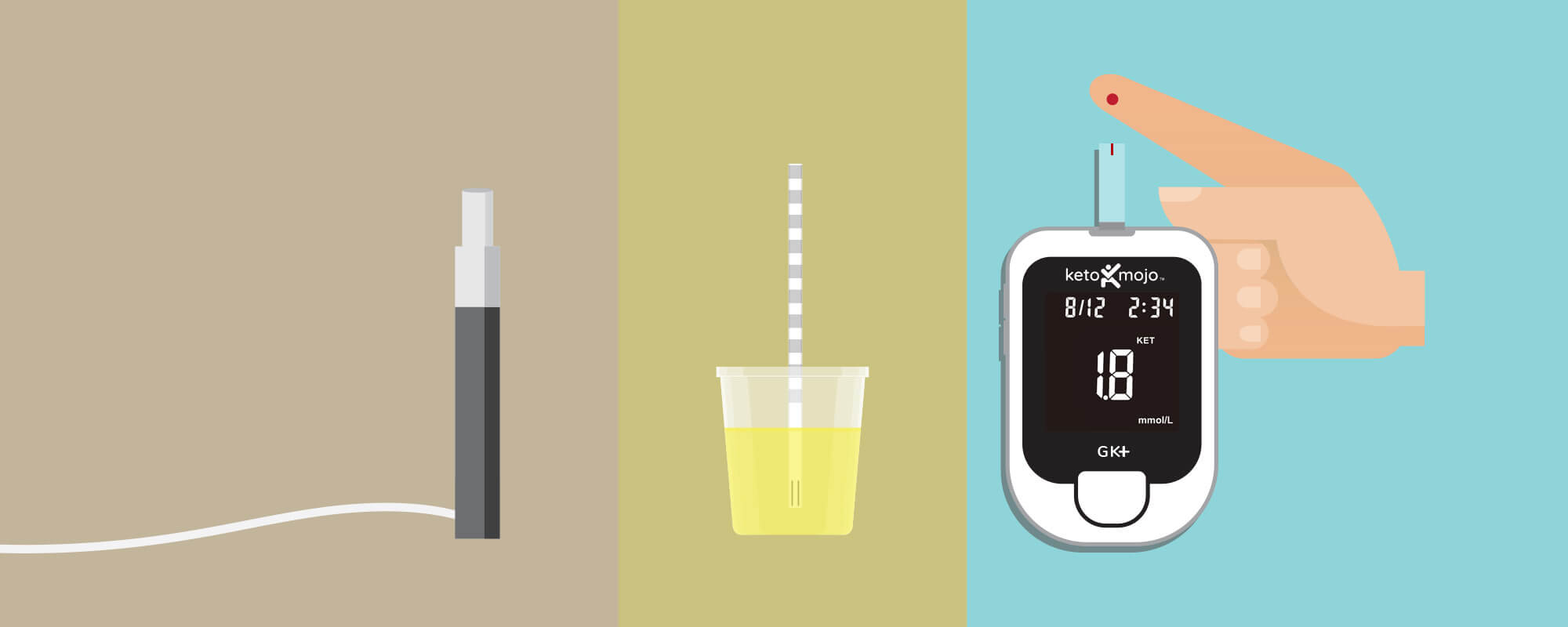
There are three main ways to test ketones: blood, breath, and urine. Each measures a different substance and provides different information.
Let’s look at how these methods compare.
Three Types of Ketone Bodies
The liver produces three ketone bodies, commonly called ketones: acetoacetate, acetone, and beta-hydroxybutyrate (BHB). Understanding their differences is helpful because blood, breath, and urine tests each measure a different ketone body.
Acetoacetate: Acetoacetate is the first ketone body produced by the liver during ketogenesis. Some is converted into BHB or acetone, while some is excreted in the urine.
Acetone: Acetone is produced when acetoacetate breaks down due to being unstable in the blood. A portion of it is eliminated through the breath, making it possible to measure breath acetone levels.
Beta-hydroxybutyrate (BHB): BHB is the most abundant ketone body circulating in the blood during nutritional ketosis. It can be used for energy by many tissues, including the brain, heart, and skeletal muscles. BHB can be measured with a blood ketone meter.
Now that we’ve reviewed the three ketone bodies, let’s look at how each testing method works, along with its advantages and limitations.
Urine Ketone Strips
Urine ketone strips are inexpensive and widely available at pharmacies and supermarkets. To use them, dip a strip into a urine sample and compare its color to the chart on the package. The color indicates the approximate acetoacetate concentration in your urine, with darker colors indicating higher levels.
Urine ketone strips are primarily used to help detect elevated ketones in people with diabetes who may be at risk for diabetic ketoacidosis (DKA). Unlike nutritional ketosis, DKA is a potentially life-threatening condition involving excessive ketone production and metabolic acidosis, usually due to insufficient insulin. Although DKA typically occurs with high blood glucose, it can sometimes develop when glucose levels are only mildly elevated or even near normal, particularly in people who take SGLT2 inhibitor medication. Blood ketone testing is generally preferred when DKA is suspected, but urine strips can still be useful when blood testing is not available.
Additionally, acetoacetate is often more easily detected in urine during the early stages of a ketogenic diet. As people become keto-adapted, their kidneys absorb more acetoacetate and excrete less in the urine, even though their bodies are still making and using ketones. Urine ketone readings are also affected by hydration, and interpreting the color changes can be somewhat subjective.
Urine strips are sensitive to air and moisture, so it’s important to follow the manufacturer’s storage instructions and expiration guidance. Some products recommend discarding strips within 30 days of opening.
Bottom line: Urine ketone strips are an inexpensive way to detect urinary acetoacetate, particularly when starting a ketogenic diet. They can also help screen elevated ketones in people with diabetes, although blood ketone testing is preferred when DKA is a concern. However, urine strips are not reliable for determining whether someone is in nutritional ketosis.
A note about methylene blue: Methylene blue is used as a prescription medication for certain medical conditions and is also found in some supplements. Because it can discolor urine, it may interfere with color-based urine tests, so urine ketone strip results may not be accurate while taking it. The FDA prescribing information for methylene blue also notes this potential interference. If you take methylene blue, speak with your healthcare provider about the most appropriate way to test your ketones, and don’t change or discontinue any medication or supplement without consulting them.
Ketone Breath Testing
Breath ketone devices, or breathalyzers, measure acetone, a ketone body produced from acetoacetate. Because it is volatile, it crosses from the blood and is released through the lungs. Breath acetone is typically reported in parts per million (ppm). Testing is noninvasive and doesn’t require blood or urine strips, making it a convenient option for monitoring changes in ketone production.
However, the accuracy and reliability of breath testing depend on the technology used. Many commercially available breath ketone meters use metal oxide semiconductor sensors, which can be affected by substances other than acetone. Alcohol, tobacco smoke, e-cigarette vapor, mouthwash, certain foods and beverages, medications, and environmental chemicals may interfere with readings. The degree of interference varies by device and sensor technology.
Breath acetone levels can vary with physical activity and time of day, and breathing patterns can also affect results. Consistent testing procedures are therefore important.
Most breath ketone devices on the market are also susceptible to sensor drift or declining accuracy over time and may require calibration, maintenance, or sensor replacement. Users should follow the manufacturer’s instructions and look for devices independently validated against established laboratory methods, such as gas chromatography–mass spectrometry.
Bottom line: Breath testing offers a convenient, noninvasive way to monitor breath acetone, which can provide insight into ketone production. However, limitations of current consumer breath meters, particularly those using metal oxide sensors, can affect the reliability of results. Breath acetone measurements also cannot be used interchangeably with blood BHB levels to determine nutritional ketosis.
Blood Ketone Testing
Blood ketone testing measures beta-hydroxybutyrate (BHB), the main ketone body circulating in the blood during nutritional ketosis. In the past, measuring blood ketones required specialized laboratory equipment. Today, blood ketone meters allow people to measure BHB levels at home using a small blood sample from a finger prick, with results available in seconds. BHB testing is currently considered the gold standard for assessing nutritional ketosis, and it is widely used in clinical care and research.
Blood testing provides a direct, quantitative measurement of circulating BHB, typically reported in millimoles per liter (mmol/L or mM). The main disadvantages are the need for a finger prick and the ongoing cost of test strips, particularly for people who test frequently.
Bottom line: Blood BHB testing provides a reliable measurement of blood ketone concentration, although accuracy depends on the quality of the meter and test strips, as well as proper testing technique.
The Final Word
Blood, breath, and urine testing can all provide useful information about ketone production, but each method measures a different ketone body and has its own advantages and limitations. Blood BHB testing is currently considered the gold standard for assessing nutritional ketosis, while breath acetone and urine acetoacetate testing offer noninvasive alternatives for monitoring ketones. Understanding these differences can help you choose the testing method that best fits your needs and goals.