
The new inverted food pyramid accompanying the Dietary Guidelines for Americans (DGA) is a welcome step forward, with a stronger focus on real, minimally processed, nutrient-dense foods. In many ways, it reflects principles that have long been emphasized in low-carbohydrate and ketogenic approaches.
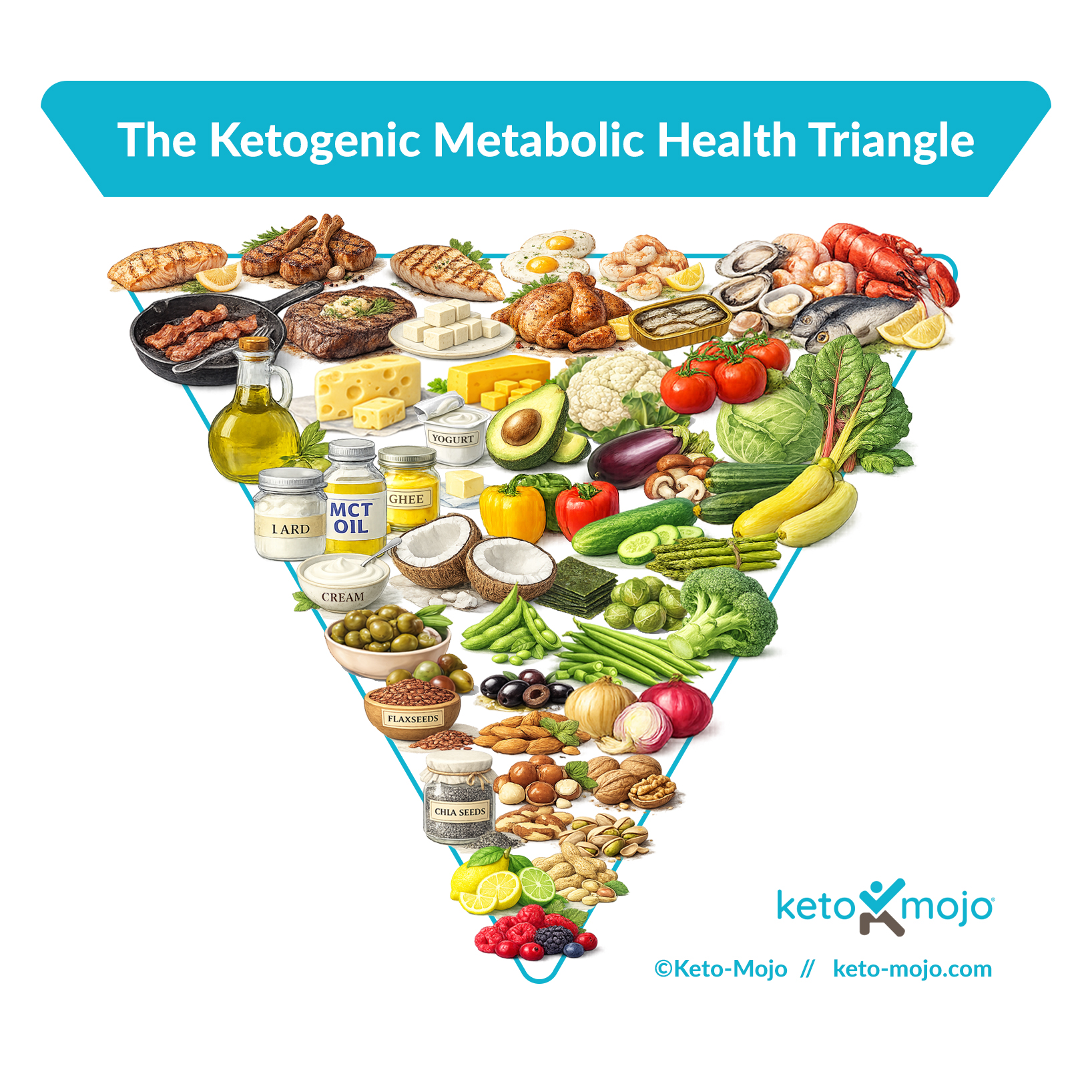
Building on this shift, we’ve created the Ketogenic Metabolic Health Triangle, an inverted food pyramid designed for people following a ketogenic lifestyle to support metabolic health and nutritional ketosis. (Note: This pyramid may not be applicable for certain therapeutic ketogenic interventions that require lower protein intake, such as those used to treat epilepsy.)
The two pyramids share several important similarities, along with some clear differences.
Key similarities:
- Emphasize real, minimally processed foods as the foundation of a healthy diet
- Prioritize adequate protein and healthy fats rather than carbohydrate-rich foods
- Encourage eating a wide variety of colorful vegetables to support overall health
Key differences:
- The DGA pyramid encourages eating all types of fruits, including higher-sugar options, while the ketogenic version limits fruit to berries to help keep carbohydrate intake low.
- The DGA pyramid contains all vegetables, including starchy vegetables like potatoes and green peas, whereas the ketogenic version focuses on non-starchy vegetables like leafy greens, cauliflower, broccoli, cucumbers, and many others.
- The DGA pyramid includes whole milk and other dairy products that are rich in lactose, while the ketogenic pyramid emphasizes cream and fermented dairy products like yogurt and cheese
- The DGA pyramid allows small amounts of whole grains, whereas the ketogenic version excludes grains entirely.
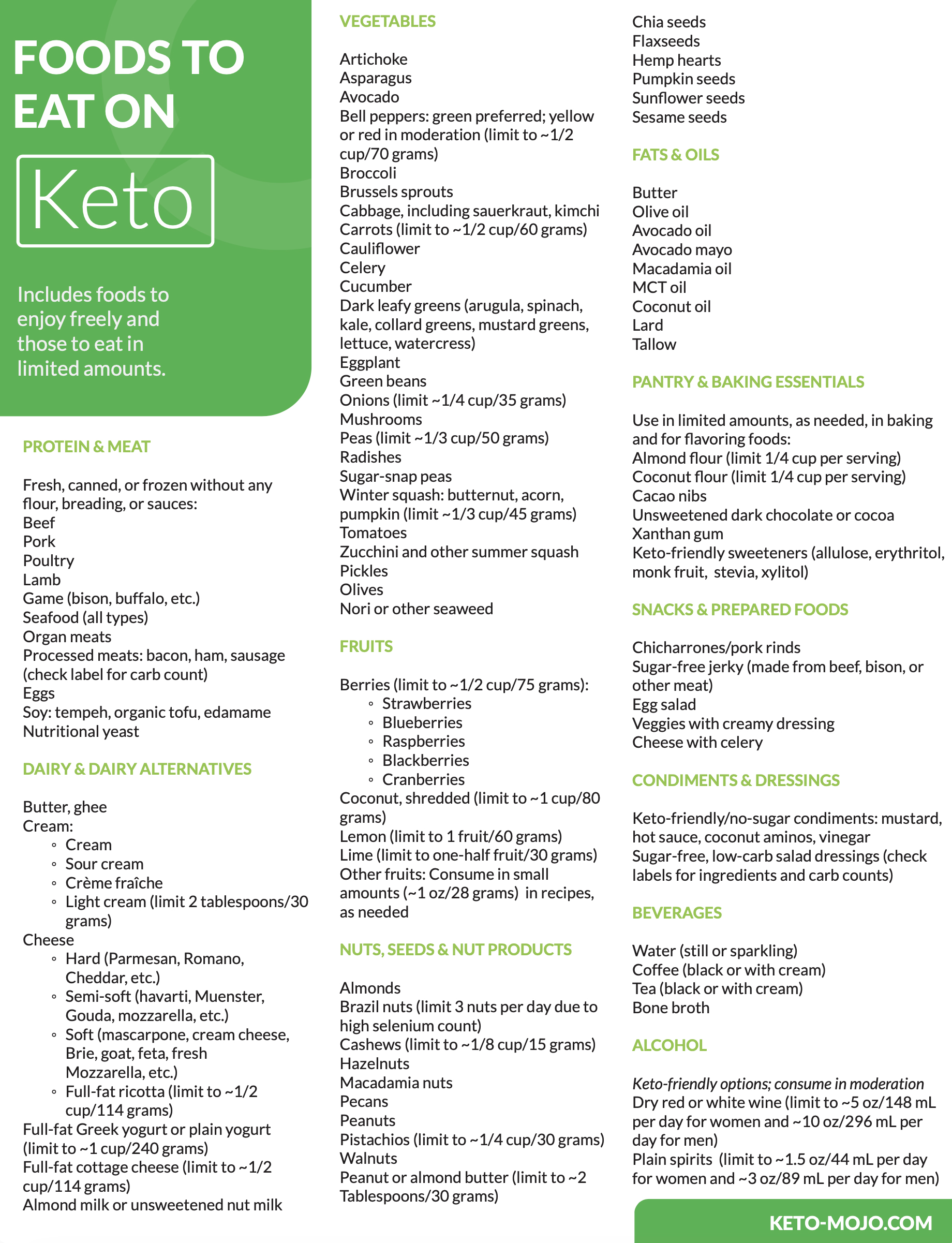
The Ketogenic Metabolic Health Triangle shows a wide range of foods that can fit into a ketogenic lifestyle. Below, you’ll find a more comprehensive list that you can refer to when planning meals and making everyday keto-friendly choices.