Diabetes, Endocrine
Broad-Spectrum Effects of Carbohydrate Reduction on Inflammatory and Immune Mediators in Type 2 Diabetes
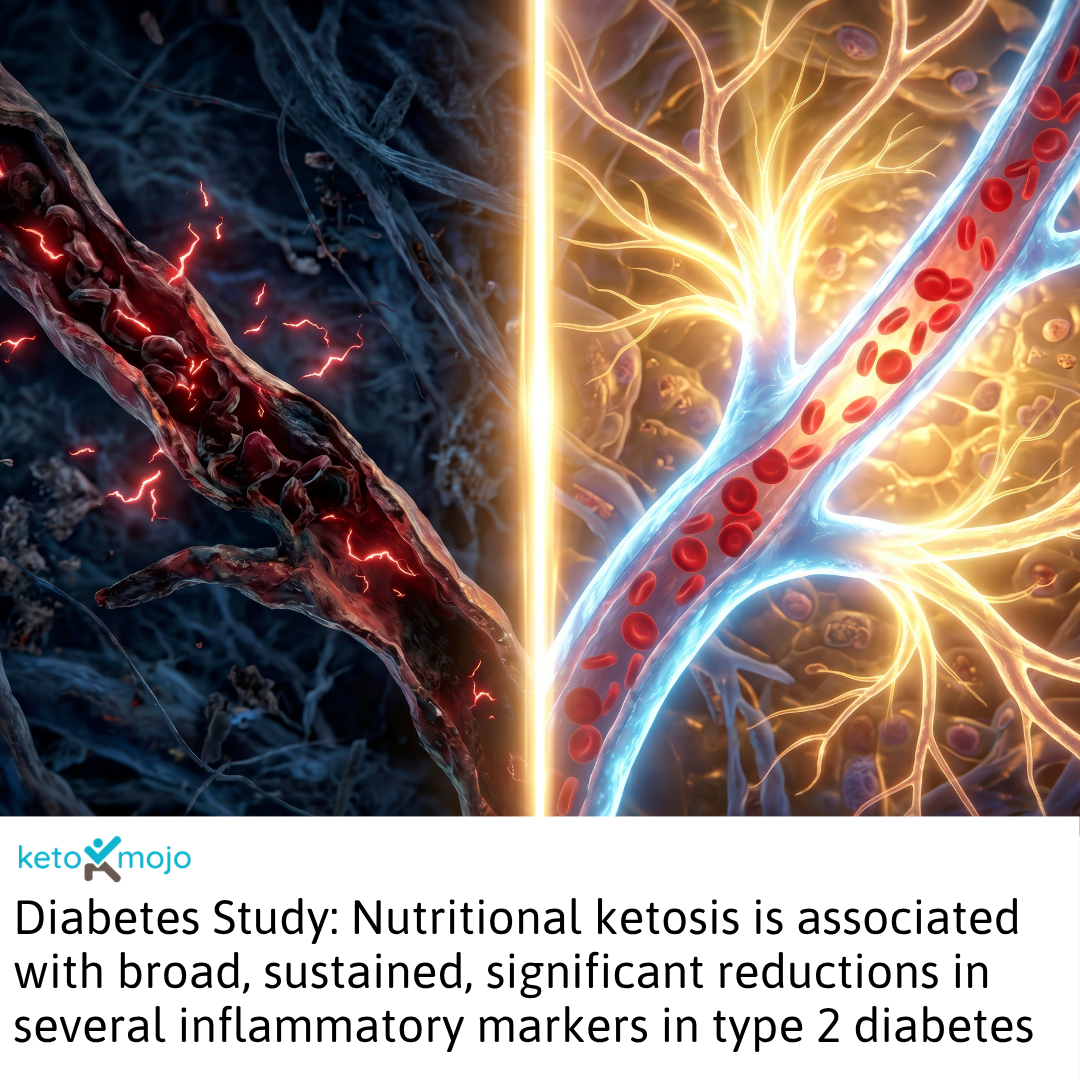
This study examined the long-term effects of carbohydrate reduction with nutritional ketosis on inflammatory and immune markers in adults with type 2 diabetes (T2D) and prediabetes. Chronic low-grade inflammation is considered a major contributor to insulin resistance, β-cell dysfunction, cardiovascular disease, and diabetic complications. While low-carbohydrate ketogenic interventions are known to improve glycemic control and body weight, their broader effects on immune and inflammatory pathways have been less clear.
Researchers conducted a post-hoc analysis of participants enrolled in a two-year continuous care intervention (CCI) emphasizing carbohydrate restriction sufficient to maintain nutritional ketosis (β-hydroxybutyrate 0.5-3.0 mmol/L).
The study included 195 adults with T2D and 89 with prediabetes in the intervention group, compared with 63 adults with T2D receiving usual care. Participants in the CCI received remote medical supervision, nutrition counseling, and behavioral support from their care team, with carbohydrate intake generally limited to 30-50 grams or less per day.
Blood samples were collected at baseline, 1 year, and 2 years to assess inflammatory cytokines, adhesion molecules, hsCRP, and complete blood count-derived inflammatory indices.
Results
- In participants with type 2 diabetes undergoing the ketogenic intervention, 19 of 21 inflammatory and immune markers decreased after 1 year, with most improvements maintained at 2 years.
- Compared with baseline, significant reductions in the CCI at 1 year included hsCRP (−32.1%), white blood cell count (−9.7%), IL-6 (−18.6%), IL-18 (−13.8%), IL-1β (−13.8%), TNF-α (−13.4%), E-selectin (−29.6%), VEGF-A (−12.8%), systemic immune-inflammation index (SII; −14.1%), and systemic inflammation response index (SIRI; −12.6%).
- Participants with prediabetes in the CCI also experienced reductions in inflammatory markers, although improvements were generally smaller than those observed in the type 2 diabetes group. In contrast, the usual care group showed little to no improvement over time.
- Higher blood β-hydroxybutyrate (BHB) levels, reflecting greater nutritional ketosis, were independently associated with reductions in white blood cell count, ICAM-1, VEGF-A, and SII. Greater weight loss was independently associated with reductions in IL-6, IL-18, IL-1β, TNF-α, and IL-8.
- Improvements in several inflammatory markers, particularly IL-18, IL-6, and IL-1β, were associated with better glycemic control and insulin resistance outcomes.
The authors conclude that a well-formulated ketogenic intervention produced broad and sustained anti-inflammatory effects beyond glucose lowering alone. The findings suggest that nutritional ketosis and carbohydrate restriction may improve multiple inflammatory pathways implicated in T2D progression and complications, potentially by suppressing the NLRP3 inflammasome and NF-κB signaling. The study also highlights that both ketosis and weight loss appear to contribute independently to these immunometabolic improvements.
 Source: Endocrine Research