Cancer
Very Low-Carbohydrate Ketogenic Diet in Treatment-Naïve Women with Endometrial Cancer and Overweight: A Randomized Feasibility Study
Endometrial cancer is strongly associated with obesity, insulin resistance, and hyperinsulinemia. More than 90% of endometrial tumors contain alterations in the PI3K signaling pathway, which promotes cell growth and proliferation and can be activated by insulin and insulin-like growth factor-1 (IGF-1). Because very low-carbohydrate ketogenic diets (VLCDs) can substantially reduce circulating insulin levels, researchers investigated whether a ketogenic diet could be safely implemented in women with newly diagnosed endometrial cancer and whether it might influence metabolic and tumor-related biomarkers.
This multicenter randomized controlled feasibility trial enrolled 19 women with overweight or obesity and treatment-naïve endometrial cancer. Participants were randomized 2:1 to either a VLCD or their usual diet during the 3–4 week interval between diagnosis and surgical treatment.
Fifteen women completed the study. The VLCD group received individualized, eucaloric prepared meals formulated to provide approximately 87% of calories from fat, 9% from protein, and 6% from carbohydrate. Participants consumed the diet for an average of 26 days and met weekly with a study dietitian. Adherence was assessed through meal completion and blood β-hydroxybutyrate (BHB) measurements.
Results/Key Findings
Feasibility and tolerance:
- Participants consumed 91 ± 4% of provided meals.
- Overall attrition was 21%, below the prespecified feasibility threshold.
- No participant withdrew because of inability to follow the diet.
- No grade 3 or 4 adverse events occurred.
Nutritional ketosis:
- All VLCD participants developed urinary ketones within 3–4 days.
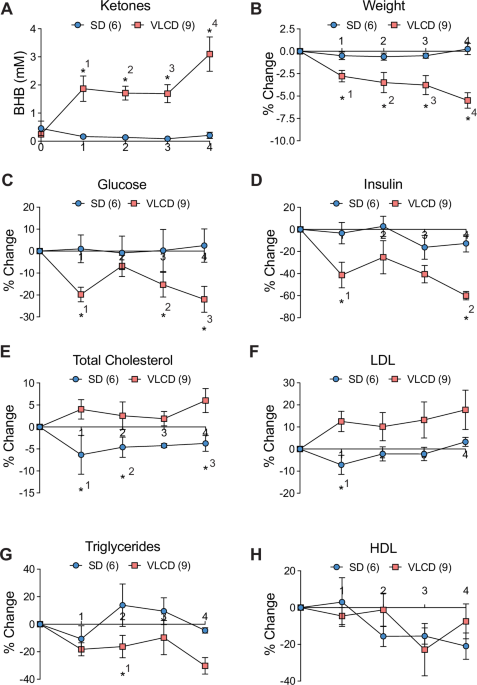
- Mean plasma BHB reached approximately 1.9 mmol/L during the first week and remained elevated throughout the intervention.
Body weight and metabolic outcomes:
- Body weight decreased by 5.5 ± 0.8%.
- Fasting glucose decreased by 22 ± 6%.
- Fasting insulin decreased by 60 ± 4%.
- HbA1c, C-peptide, IGF-1, and leptin also decreased.
Lipid outcomes:
- Total cholesterol increased by 6 ± 3%.
- LDL cholesterol increased by 18 ± 9%.
- Triglycerides tended to decrease.
- HDL cholesterol remained unchanged.
Tumor signaling and immune markers:
- Tumor PI3K signaling (p-AKT) decreased significantly in the VLCD group.
- RNA sequencing showed enrichment of oxidative phosphorylation, fatty acid metabolism, and interferon-α response pathways.
- Gene expression analyses suggested increased CD8⁺ T-cell activity.
- Immunohistochemistry confirmed greater CD8⁺ T-cell infiltration at the tumor margin.
The authors concluded that a very low-carbohydrate ketogenic diet was feasible, safe, and highly effective at lowering insulin in women with endometrial cancer. The intervention also produced measurable changes in tumor signaling and immune-related pathways within a relatively short period. However, because this was a small feasibility study with a brief intervention period, the findings should be considered preliminary and hypothesis-generating. Larger clinical trials are needed to determine whether these metabolic and immune changes translate into improved cancer outcomes.
 Source: Nature Communications