

Metabolic health is often discussed without being clearly defined.
It’s commonly associated with weight, but the two are not the same. A person can have a higher body weight and be metabolically healthy, or be within a “normal” weight range and still have metabolic dysfunction.
At its core, metabolic health reflects how efficiently your body uses and stores energy, regulates glucose, and responds to hormones like insulin – all key aspects of metabolism. These processes influence long-term risk for conditions such as type 2 diabetes and cardiovascular disease.
Defining Metabolic Health
Metabolic health is best assessed using a combination of biomarkers rather than a single number.
Typical indicators include:
- Blood glucose
- Fasting insulin and markers of insulin sensitivity, such as HOMA-IR
- Lipids, such as triglycerides and HDL cholesterol
- Waist circumference
- Blood pressure
- Inflammatory markers, such as C-reactive protein
Because these markers are often checked infrequently, early changes in metabolic health can go unnoticed.
Metabolic Flexibility: Why It Matters
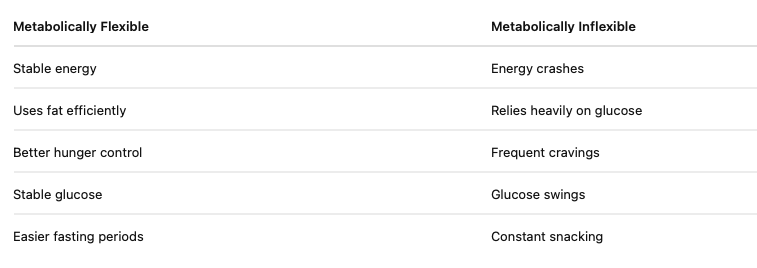
A key feature of metabolic health is metabolic flexibility, which is the ability to switch between glucose and fat as fuel.
In a metabolically flexible state, the body:
- Uses glucose or fat after meals, depending on what has been consumed and is available
- Transitions to fat burning between meals
- Maintains stable energy levels
When this flexibility is impaired, the body may rely more heavily on glucose and have difficulty accessing stored fat, contributing to hunger, energy fluctuations, and challenges with blood sugar regulation.
Where Keto Fits In
A low-carbohydrate or ketogenic approach can help support metabolic flexibility by shifting the body toward greater reliance on fat as a fuel source.
When carbohydrate intake is reduced:
- Glucose and insulin levels decrease
- Fat oxidation increases
- Ketones are produced as an alternative fuel
When blood ketone levels reach a measurable threshold – typically a beta-hydroxybutyrate (BHB) level of 0.5 mmol/L – the body is considered to be in nutritional ketosis. Levels between 0.5–5.0 mmol/L are consistent with euketonemia, a beneficial range of ketosis associated with efficient fat utilization and ketone production. For this reason, monitoring ketone levels can provide insight into how the body is using energy.
Keto is best viewed as a tool to improve metabolic function, not just a strategy for weight loss. When combined with other lifestyle factors, it can help support more stable and efficient energy use.
To learn more, read our article, Restoring Metabolic Flexibility Through a Ketogenic Lifestyle.
A Data-Driven Approach to Metabolic Health
Improving metabolic health isn’t only about following a specific diet. It’s about understanding how your body responds to the nutritional changes you make.
Without objective feedback, it’s easy to rely on assumptions about whether something is “working” based on how you feel. While improvements in well-being are important, they don’t always reflect what’s happening metabolically.
Using feedback from biomarkers on a regular basis allows for a more precise and personalized approach. Tracking your ketones and glucose can help you:
- Identify how your body responds to different foods
- Adjust your approach based on measurable data
- Move beyond guesswork and short-term fluctuations
This shift – from following a general plan to using individualized feedback to make changes – is becoming an important part of how metabolic health is understood and managed.
Questions to Ask Your Doctor
If you’re interested in improving your metabolic health, consider asking:
- Should I be tracking my glucose more regularly?
- Would measuring ketones be helpful for me?
- What other markers beyond weight should I monitor?
- Can I share at-home metabolic data with you?
- Can we include in my labwork fasting insulin and markers of insulin sensitivity, such as HOMA-IR?
Moving Beyond Guesswork
Metabolic health is not defined by a single number or a specific diet. It reflects how well your body regulates energy and responds to food over time.
Tracking biomarkers such as glucose and ketones can provide meaningful insight into these processes and help guide more informed decisions.
For many people, the most effective approach is not just to follow a plan, but to understand their own metabolic response and adjust accordingly.