Endocrine, Gastrointestinal Health, Metabolic Syndrome
Reduced risk of liver-related events among patients receiving individualized nutrition-focused remote care in the United States
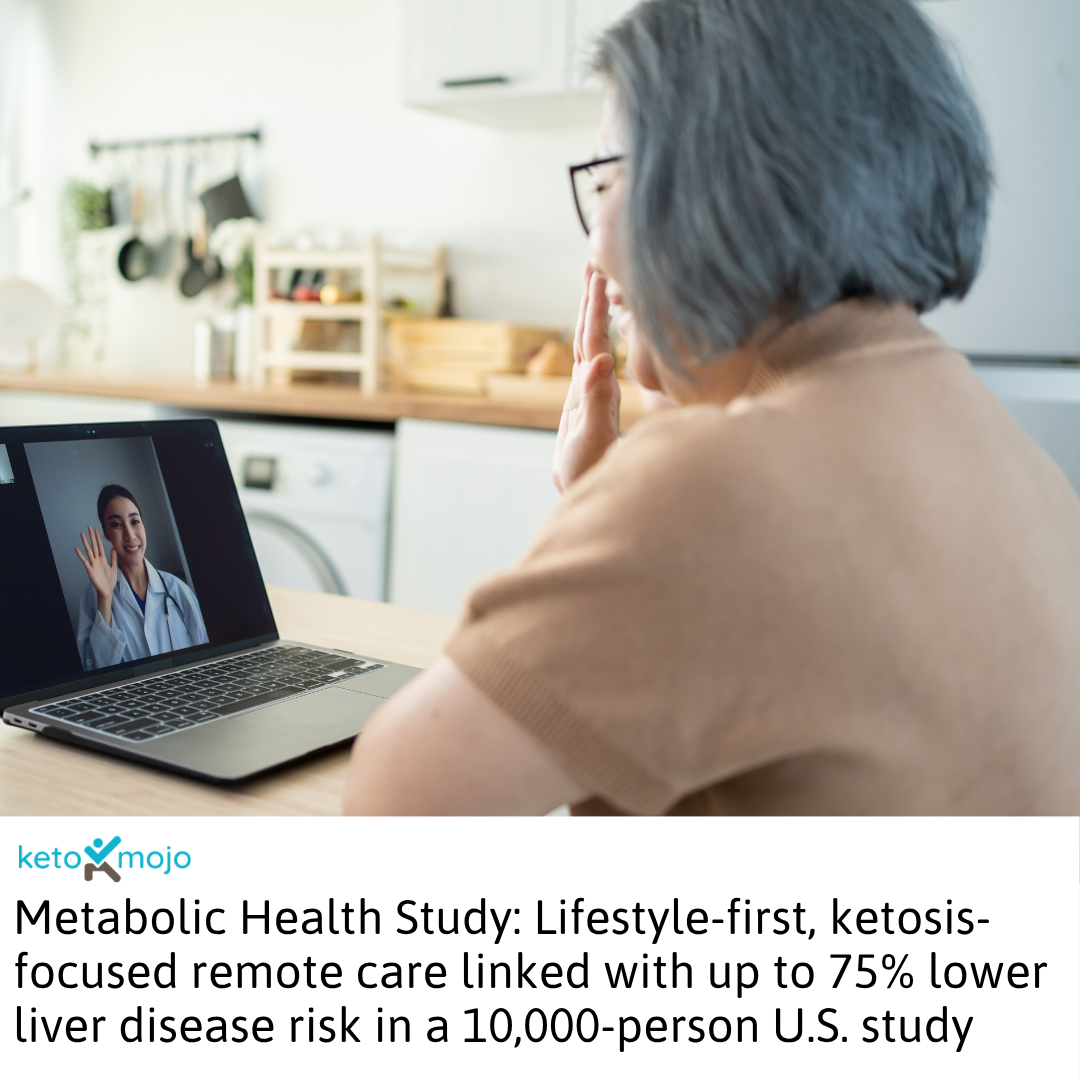
This large, real-world matched cohort study examined whether an individualized, nutrition-focused remote care program could reduce the risk of liver disease in adults with type 2 diabetes, prediabetes, overweight, or obesity. These populations are at elevated risk for metabolic dysfunction–associated steatotic liver disease (MASLD) and its progressive form, metabolic dysfunction–associated steatohepatitis (MASH), which can lead to cirrhosis and liver complications.
Using a U.S. administrative claims database, 5,031 participants in the remote care program were matched 1:1 with 5,031 individuals receiving usual care and followed for up to 5 years (mean ~2 years). The intervention combined telemedicine support, health coaching, medication management, and a carbohydrate-restricted nutritional approach to achieve nutritional ketosis and promote weight loss. Primary outcomes included new-onset liver-related diagnoses, MASH and beyond, advanced liver disease, and liver-related complications.
Across multiple analytic strategies and sensitivity analyses, program participation was associated with a consistently lower incidence of liver-related outcomes.
Results/Key Findings
- Any liver-related diagnosis
-
- 27.3 vs. 42.8 cases per 1000 person-years
- ~39% lower relative risk (HR 0.61, p < 0.001)
-
- MASH and beyond (progressive liver disease)
-
- 4.2 vs. 10.7 cases per 1000 person-years
- ~62% lower relative risk (HR 0.38, p < 0.001)
-
- Advanced liver disease (e.g., cirrhosis, portal hypertension)
-
- 2.8 vs. 8.7 cases per 1000 person-years
- ~67% lower relative risk (HR 0.33, p < 0.001)
-
- Liver-related complications
-
- 2.0 vs. 7.7 cases per 1000 person-years
- ~75% lower relative risk (HR 0.25, p < 0.001)
-
- Weight loss and risk (within intervention group)
-
- ≥15% weight loss associated with lower risk of liver disease
- 21.2 vs. 31.8 cases per 1000 person-years
- ~34% lower relative risk (HR 0.66, p = 0.02)
-
Conclusion
Participation in a structured, nutrition-focused remote care program emphasizing carbohydrate reduction and nutritional ketosis was associated with lower incidence of MASLD, MASH, advanced liver disease, and liver-related complications. These findings support the role of sustained weight loss and metabolically targeted lifestyle interventions in reducing liver disease risk in high-risk populations.

 Source: Hepatology