Cardiovascular Disease, Diabetes
One-year change in PREVENT-estimated cardiovascular risk during telehealth metabolic care centered on a therapeutic ketogenic diet
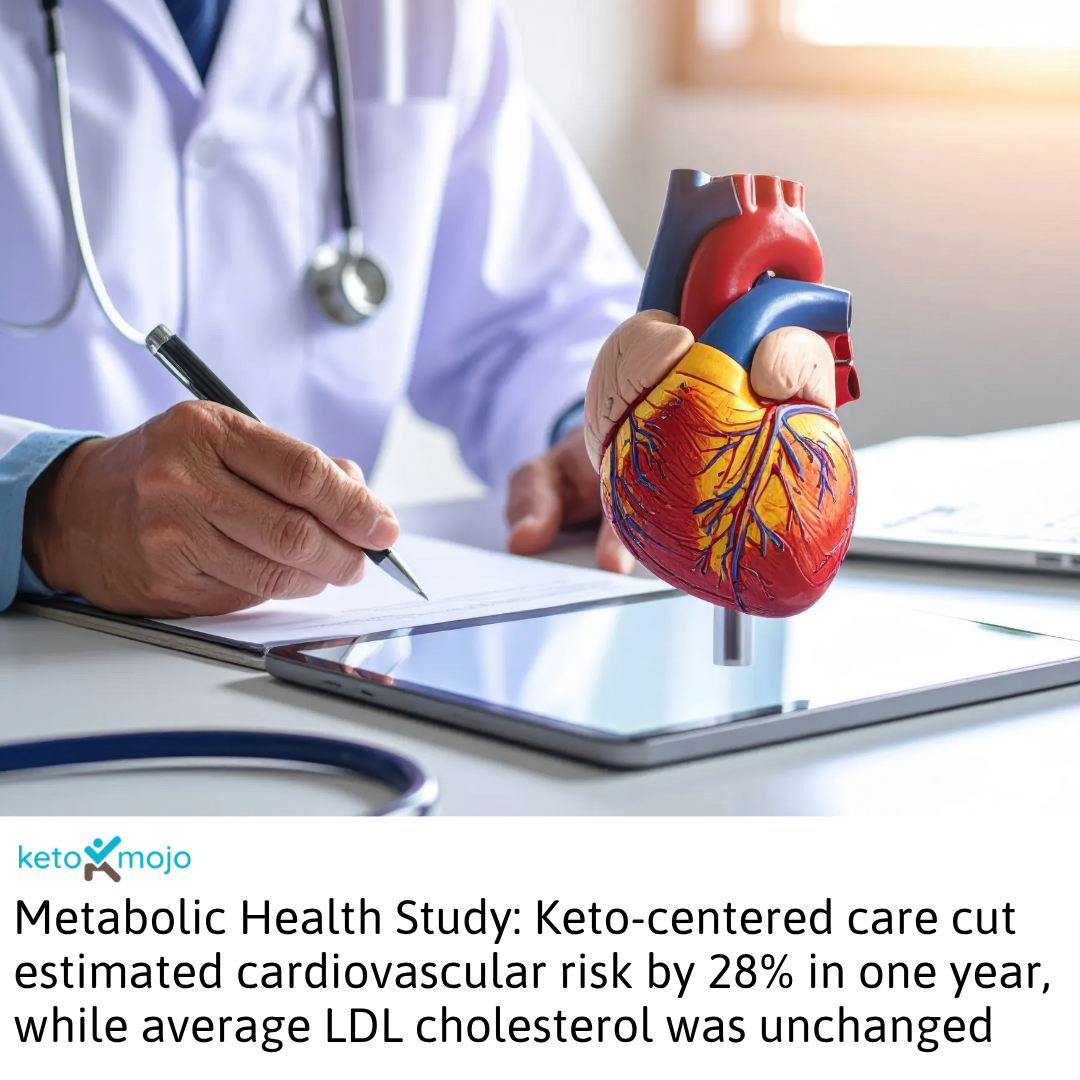
Cardiovascular risk assessment involves more than cholesterol levels alone. Changes in blood pressure, blood glucose, kidney function, and medication use also influence estimated cardiovascular risk. This study examined whether improvements in these factors during a ketogenic diet-centered metabolic care program translated into lower estimated cardiovascular risk over one year.
In this retrospective, single-arm cohort study, researchers evaluated 120 adults with overweight or obesity enrolled in the TOWARD telehealth metabolic care program. The intervention combined an individualized, whole-food ketogenic diet limiting carbohydrates to ≤30 g/day, without prescribed saturated fat restriction, combined with virtual medical visits, coaching, remote monitoring, and medication adjustments when appropriate.
Of the 120 participants, the primary one-year analysis included 90. Researchers used the American Heart Association’s PREVENT equations to estimate 10-year and 30-year risks of total cardiovascular disease (CVD), atherosclerotic cardiovascular disease (ASCVD), and heart failure.
Key Findings
- Weight loss: Weight decreased in 89 of 90 participants, with a median 12.2% reduction after one year.
- Cardiometabolic markers: Systolic blood pressure decreased by 10.7 mmHg, HbA1c by 0.48 percentage points, and triglycerides by 34 mg/dL. HDL cholesterol increased by 5.1 mg/dL.
- LDL cholesterol: Mean LDL-C and total cholesterol remained unchanged despite unrestricted saturated fat. Individual LDL-C responses varied.
- 10-year cardiovascular risk: PREVENT-estimated risk decreased by 28% for total CVD, 29% for ASCVD, and 42% for heart failure.
- 30-year cardiovascular risk: Among 73 eligible participants, estimated risk decreased by 24% for total CVD, 26% for ASCVD, and 36% for heart failure.
- Diabetes remission: Thirteen participants achieved diabetes remission after one year. Antihypertensive medication use decreased from 48 to 43 participants, while statin use remained unchanged.
- Risk reduction beyond medication changes: When medication use and diabetes status were held at baseline values, estimated 10-year total CVD risk remained 21% lower. Among 50 participants without cardiometabolic medication changes, estimated risk remained 20% lower.
- Broader risk improvements: Changes in blood pressure, HbA1c, diabetes status, and lipids contributed to the estimated risk reductions. For heart failure, factors other than BMI accounted for 65% of the absolute modeled reduction.
The findings indicate that ketogenic diet-centered telehealth metabolic care was associated with substantial improvements in cardiometabolic health and lower estimated cardiovascular risk. Importantly, these improvements occurred without an average increase in LDL cholesterol.
Limitations include the study’s single-arm design and reliance on modeled risk rather than actual cardiovascular events.
The authors concluded that one year of therapeutic ketogenic diet-centered care was associated with meaningful reductions in PREVENT-estimated cardiovascular risk, including reductions that persisted after accounting for changes in medication use and diabetes status.
 Source: American Journal of Preventive Cardiology