Obesity
Defining a ketone threshold for weight loss: evidence from 14 day daily β-hydroxybutyrate monitoring in 217 subjects on a ketogenic diet
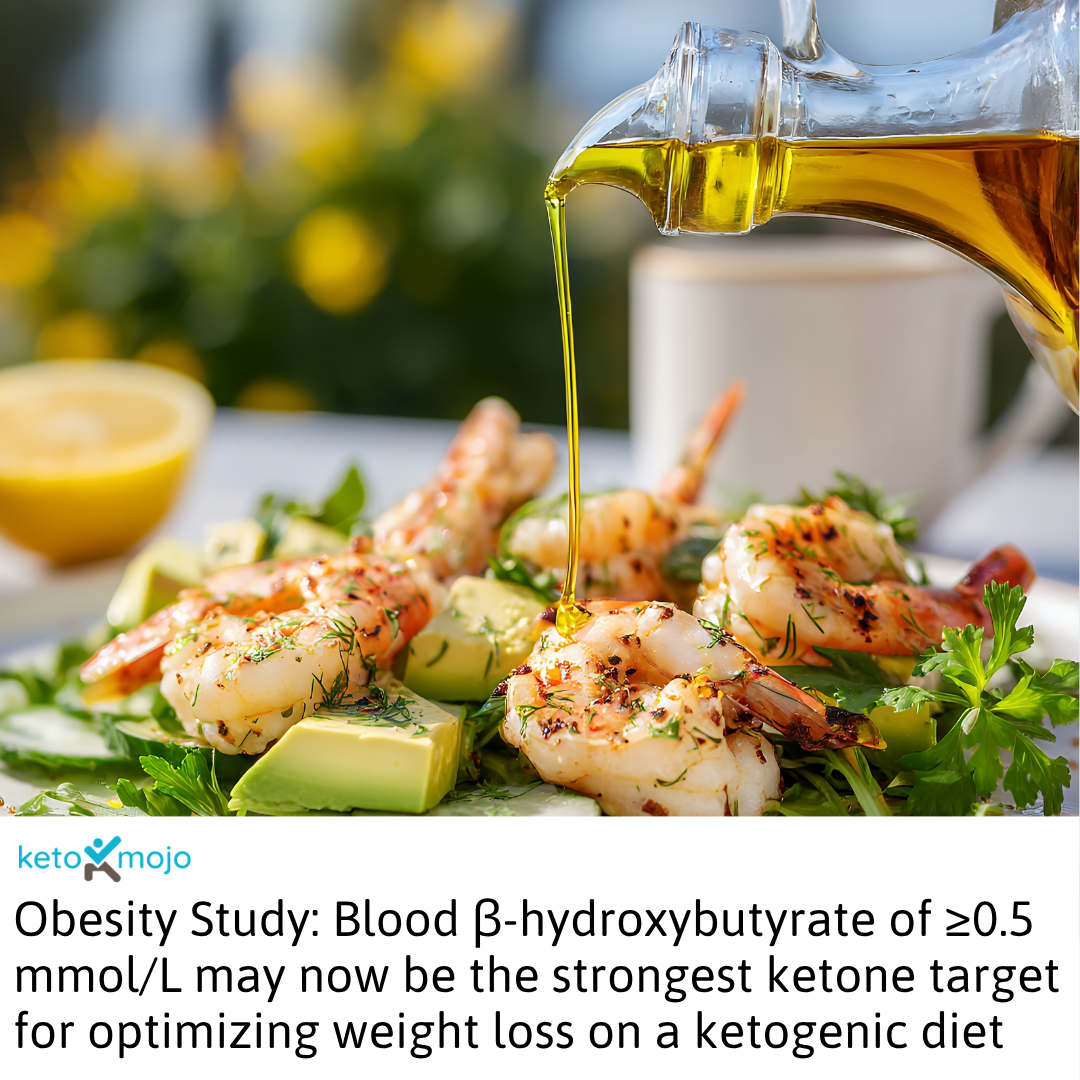
Although nutritional ketosis is considered central to the effectiveness of ketogenic diets (KDs), the minimum blood β-hydroxybutyrate (βHB) concentration associated with successful weight loss has remained uncertain. Researchers conducted this secondary analysis to identify the βHB threshold most strongly associated with weight loss, examine factors influencing the time required to achieve ketosis (time to ketosis [TtK]), and determine whether the duration of ketosis affects weight loss outcomes in adults with overweight or obesity.
The analysis included 217 adults (111 men and 106 women) aged 20–68 years with overweight or obesity who completed a 14-day ketogenic diet. Participants followed a classical ketogenic diet (CKD; n = 71) or a Mediterranean ketogenic diet enriched with phytoextracts (KEMEPHY; n = 146). Both diets restricted carbohydrate intake to <30 g/day, provided 1.2–1.5 g protein/kg/day, and supplied approximately 1,000–1,600 kcal/day. Researchers measured body weight and fasting blood βHB concentrations daily at home. Researchers compared βHB thresholds of 0.3, 0.4, and 0.5 mmol/L to determine which best predicted weight loss.
Key Findings
- Optimal ketone threshold: A blood βHB concentration of ≥0.5 mmol/L showed the strongest association with weight loss, outperforming thresholds of 0.3 and 0.4 mmol/L.
- Time to ketosis: Participants reached βHB ≥0.5 mmol/L in an average of 7.7 ± 2.6 days, with 59.9% achieving this threshold between days 5 and 8.
- Weight loss: Participants lost an average of 6.96 ± 2.70% of body weight over the 14-day intervention.
- Time under ketosis: Each additional day spent with βHB ≥0.5 mmol/L was associated with approximately 0.5 percentage points greater weight loss, whereas the day ketosis was first achieved was not independently associated with weight loss.
- Diet effects: The KEMEPHY protocol induced ketosis more rapidly than the classical ketogenic diet, particularly among women.
- Sex differences: Men lost more weight than women overall (7.60 ± 2.22% vs. 6.29 ± 2.99%), and the magnitude of this difference varied according to the ketogenic diet used.
- Clinical implications: The authors propose that monitoring βHB and minimizing the time to achieve nutritional ketosis may improve adherence monitoring and help optimize weight loss during ketogenic interventions.
The authors concluded that achieving and maintaining a blood βHB concentration of at least 0.5 mmol/L represents a practical and clinically meaningful threshold for optimizing weight loss during a ketogenic diet. They also highlight the importance of monitoring both time to ketosis (TtK) and time under ketosis (TUK), as longer time spent in nutritional ketosis was more strongly associated with greater weight loss than the speed at which ketosis was first achieved.
 Source: Nutrition & Diabetes