Neurology, Musculoskeletal, Immunological
Fasting Mimicking Diets Reverse Accelerated Biological Aging in Multiple Sclerosis
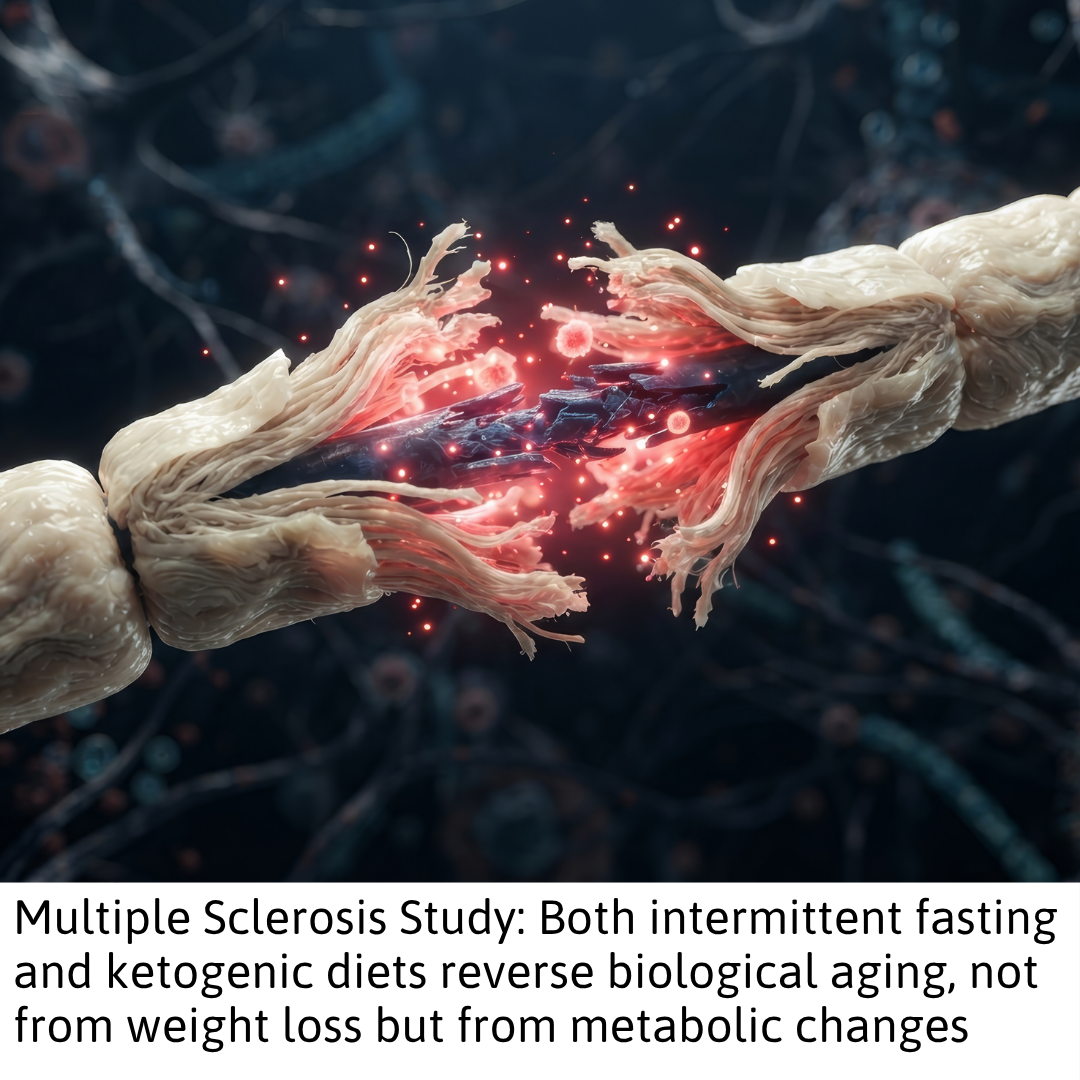
A secondary analysis of previously published studies explored whether fasting-mimicking diets (FMDs) could slow or reverse accelerated biological aging in people with multiple sclerosis. Researchers measured biological age using metabolomic age (mAge), a biomarker based on blood metabolite profiles that reflects cumulative metabolic changes from both aging and disease. People with multiple sclerosis typically show faster biological aging than healthy individuals, which may contribute to worse outcomes.
Two dietary interventions were analyzed.
In the Johns Hopkins trial, participants with relapsing–remitting MS were randomly assigned to one of three groups for eight weeks: Group 1: normal calorie intake (control), Group 2: daily calorie restriction at about 78% of daily needs, or Group 3: intermittent calorie restriction with five normal intake days and two consecutive days at only 25% of calorie needs.
In the University of Virginia trial, participants followed a 6-month modified ketogenic diet. This protocol restricted net carbohydrates to less than 20 grams per day and emphasized higher intake of healthy fats, with daily urine ketone testing monitoring adherence.
Researchers collected blood samples before and after the interventions to calculate mAge.
Key Findings
- Ketogenic diet (6 months): Participants’ biological age dropped by about one year for every month on the diet, showing a strong reversal of accelerated aging.
- Intermittent calorie restriction (8 weeks): Reduced biological age by an average of 6.6 years across the study period compared with the control group.
- Daily calorie restriction: Showed no measurable effect on biological age, despite similar weight loss to intermittent restriction.
- Since both calorie-restricted groups lost similar weight but only intermittent calorie restriction reduced mAge, the benefits likely result from metabolic and cellular effects beyond calorie deficit alone.
- Possible mechanisms: Enhanced ketone production, improved mitochondrial function, reduced inflammation, and gut microbiome changes may explain the observed benefits.
Conclusions
Fasting-mimicking diets, particularly intermittent calorie restriction and ketogenic diets, appear to reverse biological aging in people with MS, beyond what can be explained by weight loss alone. These findings highlight metabolomic age as a useful biomarker in MS research and suggest that dietary strategies could complement other treatments. However, larger and longer studies are needed to confirm whether these biological improvements translate into meaningful clinical benefit.
 Source: Annals of Neurology