Cancer, Neurology
Intensive Multimodal Ketogenic Metabolic Therapy in Glioblastoma: A Clinical Trial
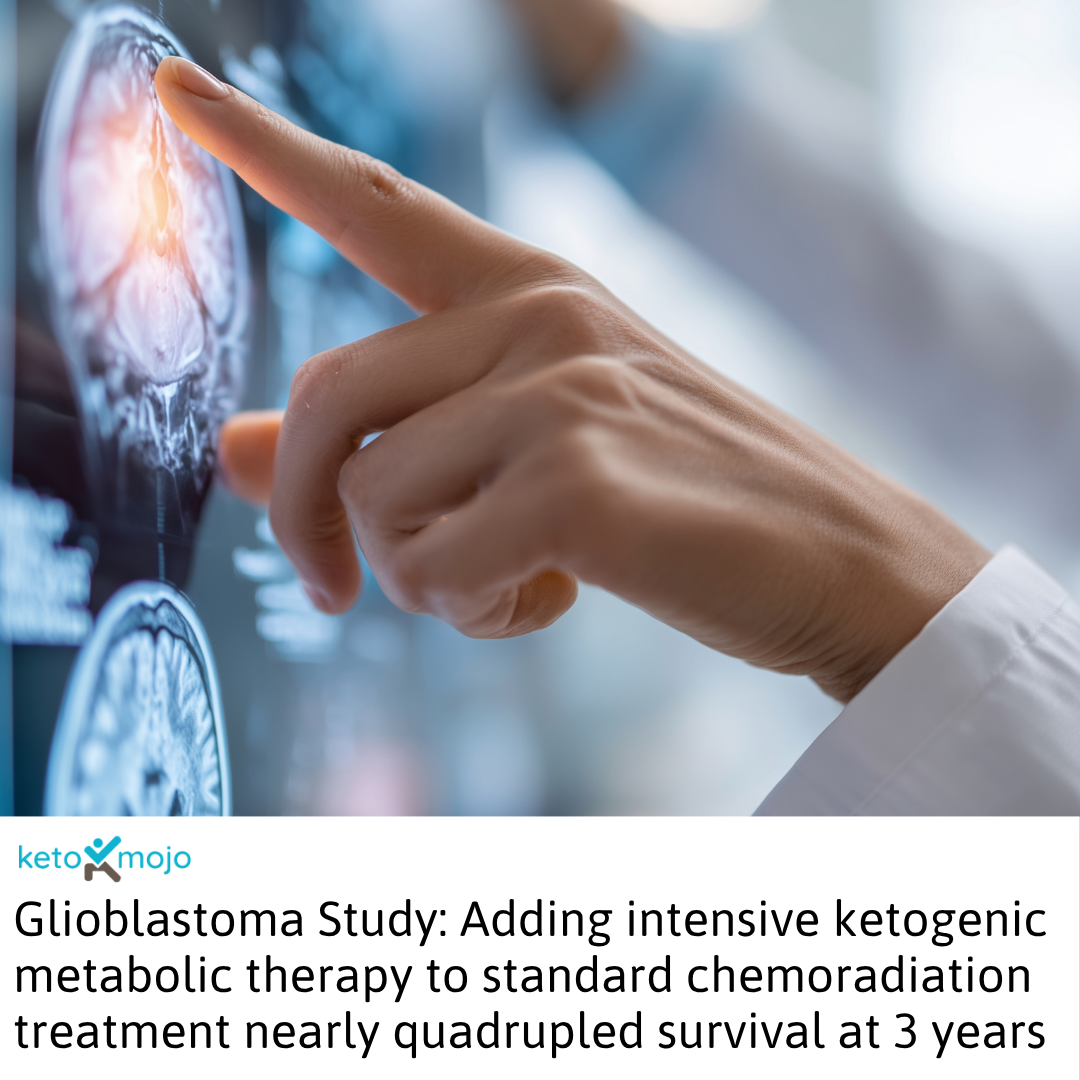
Glioblastoma (GBM), isocitrate dehydrogenase (IDH)-wildtype, is the most common and aggressive primary brain tumor in adults, with a median overall survival of approximately 11–14 months despite maximal surgery, radiotherapy, and chemotherapy. Because GBM cells depend heavily on glucose and glutamine metabolism, researchers investigated whether an intensive multimodal metabolic therapy program (MTP) could complement standard treatment by lowering the glucose ketone index (GKI), a biomarker reflecting the balance between circulating glucose and ketone levels.
This prospective clinical trial enrolled 18 adults with newly diagnosed IDH-wildtype GBM who received standard chemoradiation and adjuvant temozolomide together with an MTP consisting of eight strategically timed 5-day fluid-only fasts, daily time-restricted feeding (1–2 meals/day), and a modified ketogenic diet. Participants measured bedtime blood glucose and β-hydroxybutyrate (BHB) levels daily at home to calculate the glucose ketone index (GKI), the study’s primary measure of metabolic control. The primary endpoint was the proportion of patients maintaining a mean daily GKI ≤6 during chemoradiation.
Outcomes were compared with 14 contemporary patients who received standard treatment alone. Fifteen participants completed the metabolic intervention through chemoradiation and were included in the per-protocol analyses.
Results/Key Findings
Feasibility and adherence:
- 83% (15/18) of participants maintained the target GKI (≤6) throughout chemoradiation.
- All 15 per-protocol participants continued the program throughout chemotherapy.
Nutritional ketosis:
- Mean GKI decreased from 17.9 at baseline to 1.88 during chemoradiation and 2.53 during chemotherapy.
Body weight:
- Participants experienced intentional weight loss averaging 17%, with mean BMI decreasing from 27.1 to 22.6 kg/m².
Safety and tolerability:
- MTP-related adverse events were generally mild or moderate.
- No serious adverse events were attributed to the metabolic therapy program.
Physical function and quality of life:
- Exercise activity increased significantly.
- Both general and brain-specific quality-of-life scores improved significantly.
- Performance status remained stable throughout treatment.
Survival:
- Median overall survival was 21.5 months with the MTP versus 14.7 months in contemporary controls (HR 0.42; p = 0.027).
- Three-year survival was 27% compared with 7% in the control group.
- Progression-free survival did not differ significantly between groups.
Conclusions
The authors concluded that integrating prolonged fasting, time-restricted feeding, and a ketogenic diet with standard treatment was feasible and well tolerated in patients with newly diagnosed IDH-wildtype glioblastoma. The intervention successfully achieved sustained nutritional ketosis, improved exercise activity and quality of life, and was associated with longer overall survival compared with a contemporary control group. Larger randomized controlled trials are needed to determine whether intensive ketogenic metabolic therapy provides clinically meaningful survival benefits beyond standard treatment alone.
 Source: Neuro-Oncology Advances