
Many people assume that following a ketogenic (keto) diet is expensive. And with grocery prices rising and keto-friendly foods often priced at a premium, it’s easy to see why.
However, a well-formulated keto diet doesn’t require specialty foods or costly ingredients. In fact, keto can be both affordable and sustainable. Read on to learn more.
Why Keto Doesn’t Have to Be Expensive
One of the biggest misconceptions about keto is that it requires packaged “keto” products.
Items such as bars, shakes, and frozen meals are often marketed as easy and convenient, but they tend to be more expensive but less nutritious than basic whole foods. In addition, the term “keto” is not regulated, so these products may not align with a well-formulated ketogenic diet.
In many cases, better options can be prepared at home for a lower cost.
Food prices rose year over year in March 2026, with restaurant and foodservice costs up more sharply than grocery prices. Food-away-from-home increased 3.8% annually, while food-at-home rose 1.9%.
An affordable, nutrient-dense approach focuses on:
- Whole, minimally processed foods
- Simple meal preparation
- Flexible, repeatable meal patterns
This approach not only reduces cost but often improves overall diet quality.
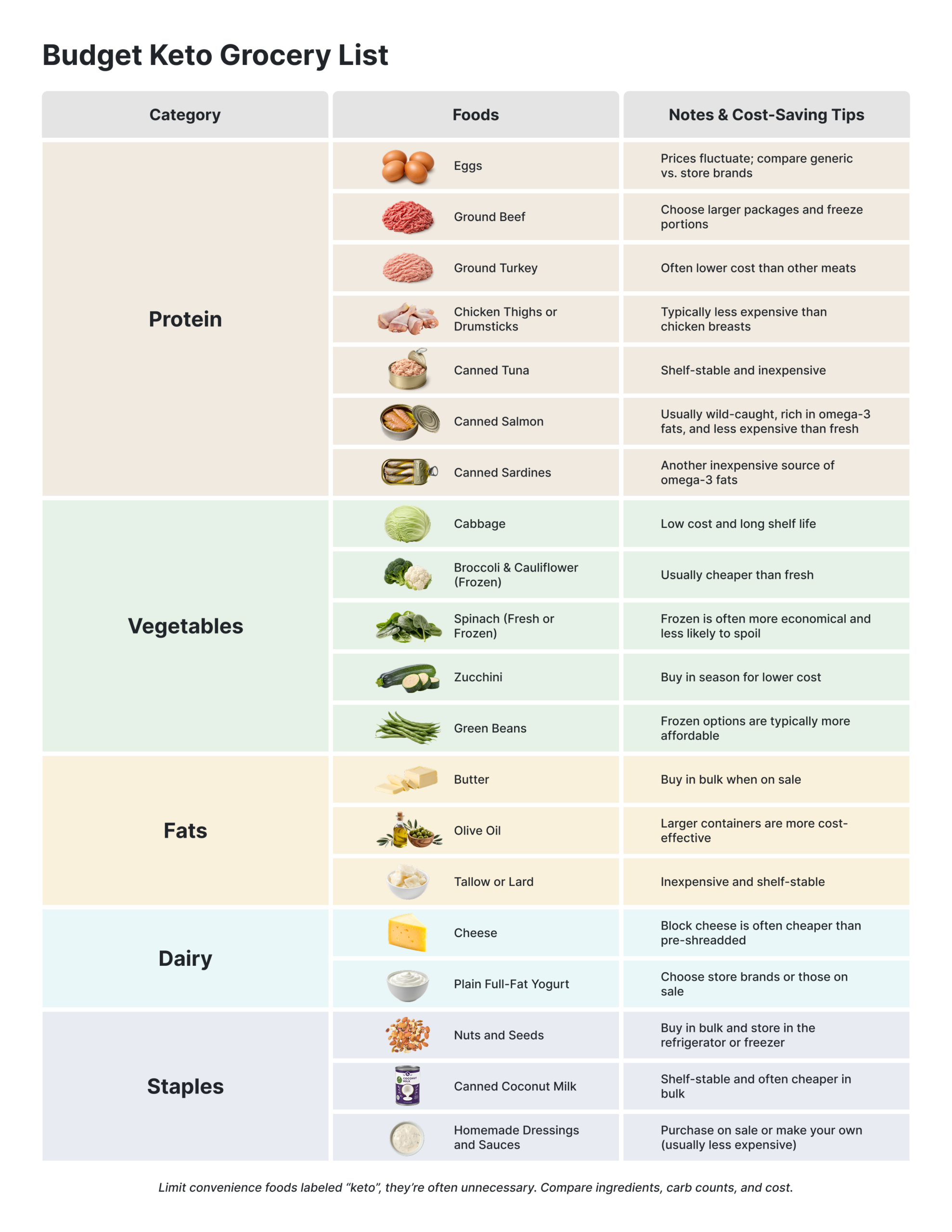
Cost-Effective Keto Staples to Build Your Meals Around
A simple, affordable grocery list like the one below can help you plan nutritious meals, reduce waste, and stay within your budget when following a ketogenic diet.
Practical Strategies for Keto Grocery Savings
Following a keto diet on a budget often comes down to how you shop and plan your meals.
A few simple strategies can make a meaningful difference:
- Build meals around what you already have: Checking your refrigerator, freezer, and pantry before shopping can help reduce waste and avoid unnecessary purchases.
- “Finish your freezer” challenge: Eat through what’s already in your fridge and freezer before buying more to cut food waste, save money, and get creative with meals.
- Shop the outer aisles: Stick to the perimeter of the grocery store, where fresh foods like produce, dairy, and proteins are typically found, to help avoid impulse buys and ultra-processed foods.
- Buy canned and frozen: Frozen and canned vegetables can be just as nutritious as fresh. Plus, they often last longer, cost less, and help reduce food waste.
- Plan meals in advance: Choosing a few simple, repeatable meals for the week – using overlapping ingredients – can help keep costs down and simplify shopping.
- Purchase food around sales: Reviewing weekly ads and selecting proteins and vegetables that are on sale can significantly reduce grocery costs.
- Buy in bulk, strategically: Purchasing frequently used ingredients in larger quantities can reduce cost, especially for shelf-stable items. Just be sure they will be used before they spoil.
- Use leftovers intentionally: Cooking larger portions and repurposing leftovers into future meals can help stretch your grocery budget.
- Stay organized: Keeping your pantry and refrigerator organized makes it easier to use what you have and avoid duplicate purchases.
Cheap Keto Meals Can Still Be Nutrient-Dense and Tasty
Eating inexpensive keto meals doesn’t mean sacrificing nutrition or flavor.
Simple meals like these can provide protein, healthy fats, and essential nutrients at a relatively low cost:
- Eggs cooked in butter with sautéed vegetables
- Ground beef with cabbage or zucchini
- Canned salmon with olive oil and leafy greens
- Chicken thighs roasted with broccoli or cauliflower
- Scrambled eggs with cheese and spinach
- Sardines mashed with avocado
- Ground turkey cooked with peppers and onions
A Sample Day of Keto Eating on a Budget
This simple example shows how a day of keto meals can be both nutritious and cost-effective:
Breakfast
Eggs cooked in butter with sautéed spinach
Lunch
Canned tuna mixed with olive oil, served over leafy greens or sliced cucumber
Dinner
Ground beef cooked with zucchini or cabbage, seasoned simply with salt, pepper, and garlic
Optional snack (if needed)
Cheese or a small portion of nuts
Key Takeaways for Affordable Keto Living
A ketogenic lifestyle doesn’t have to be expensive. Focusing on affordable and nutrient-dense staples, planning meals in advance, and using ingredients efficiently can help keep costs down without compromising nutrition or satisfaction.