Neurology, Musculoskeletal
Fasting, ketogenic, and anti-inflammatory diets in multiple sclerosis: a randomized controlled trial with 18-month follow-up
A randomized controlled trial examined the effects of a fasting diet (FD) and a ketogenic diet (KD) compared to a standard healthy diet (SD) in individuals with relapsing-remitting multiple sclerosis (MS), a chronic autoimmune disease that affects the central nervous system and can lead to progressive neurological disability.
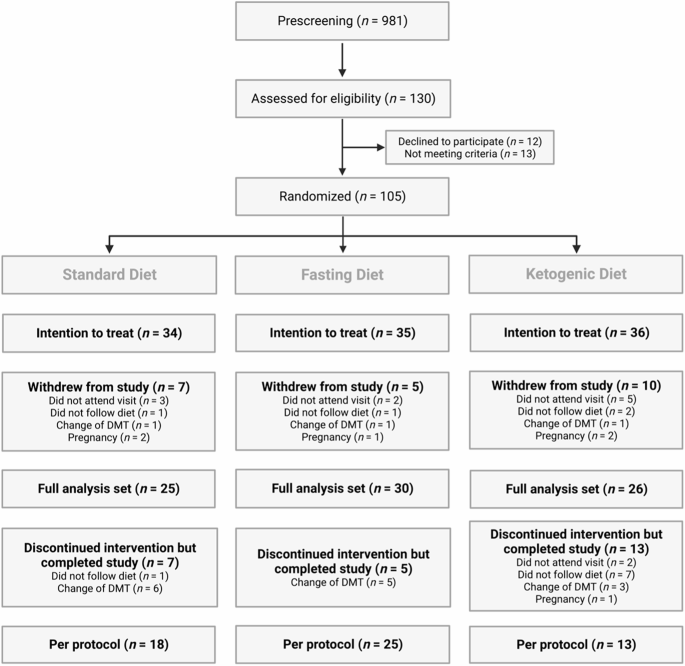
The study enrolled 105 participants and monitored them over an 18-month period. The primary endpoint was the number of new T2-weighted brain lesions observed by MRI. Secondary outcomes included neurodegeneration markers, cognitive function, depressive symptoms, and cardiometabolic health.
Participants were randomized into one of three diet groups:
- Standard Diet (SD): A plant-focused, anti-inflammatory diet with no calorie restriction.
- Fasting Diet (FD): Included 7-day fasts every 6 months and daily time-restricted eating (14:10 schedule) six days per week.
- Ketogenic Diet (KD): A low-carbohydrate (<40 g/day), high-fat (70–80% of energy) diet emphasizing plant-based fats. Participants could gradually increase carbohydrate intake to 40-50 g/day if they maintained nutritional ketosis (≥0.5 mmol/L beta-hydroxybutyrate), monitored with home ketone meters.
All participants received group-based counseling, and adherence was monitored through session attendance and diet-specific biomarkers.
Key Findings:
- No significant differences in new MRI lesions between groups after 18 months.
- KD group improved in cognitive processing scores (+3.7 points on the Symbol Digit Modalities Test).
- FD group showed reduced serum neurofilament light chain levels at 9 months, indicating less axonal injury. FD group also showed a 22% reduction in depressive symptoms.
- At 9 months, all groups experienced weight loss: KD (–8.4 lbs /3.8 kg), FD (–6.2 lbs /2.8 kg), SD (–4.4 lbs /2.0 kg).
- KD group had reduced waist circumference (–1.2 in /3 cm), lower leptin, higher adiponectin, and lower triglycerides.
- Diastolic blood pressure decreased in all groups
- All diets were safe; FD had the highest compliance (100%) and KD the lowest (77%) at 18 months.
While no effect was seen on new brain lesions, the ketogenic and fasting diets showed potential benefits for neurodegeneration, mood, cognition, and cardiometabolic health, supporting their role as complementary strategies in relapsing-remitting MS management.
 Source: BMC Nutrition