
Do you need to take magnesium when following a ketogenic lifestyle? And if so, what is the best type to take?
Magnesium is an essential mineral and electrolyte that your body needs for over 300 daily bioactivities. Since your body can’t make magnesium, you must get it from your diet, but that’s easier said than done. It’s estimated that more than half of all Americans don’t meet their daily magnesium goals. You won’t find magnesium listed on a nutrition facts label, and it’s rarely recorded by popular food-tracking apps.
Many people who follow a keto way of eating rely on magnesium supplements instead of guessing whether they’re getting enough. This article explores different food sources of magnesium and why supplementing with the right type may be a game changer for your keto lifestyle.
Why is Magnesium Important?
Your body cannot function without magnesium. It’s involved in energy production, blood glucose control, blood pressure and heart rhythm regulation (heart health), bone health, sleep, and mood regulation, among other functions. In other words, magnesium is crucial for your healthcare and wellbeing.
The recommended intake of magnesium is 400–420 mg per day for men and 310–320 mg per day for women.
Unfortunately, many foods that are rich in magnesium – such as cereal, beans, bread, potatoes, and rice – are also high in carbohydrates and don’t fit well into a ketogenic lifestyle. So how can you meet your magnesium needs while staying keto?
The good news is that there are several nutritious, keto-friendly foods that are high in magnesium. If you’re following a clean keto diet, you’re probably already eating some of them.
Keto Food Sources of Magnesium
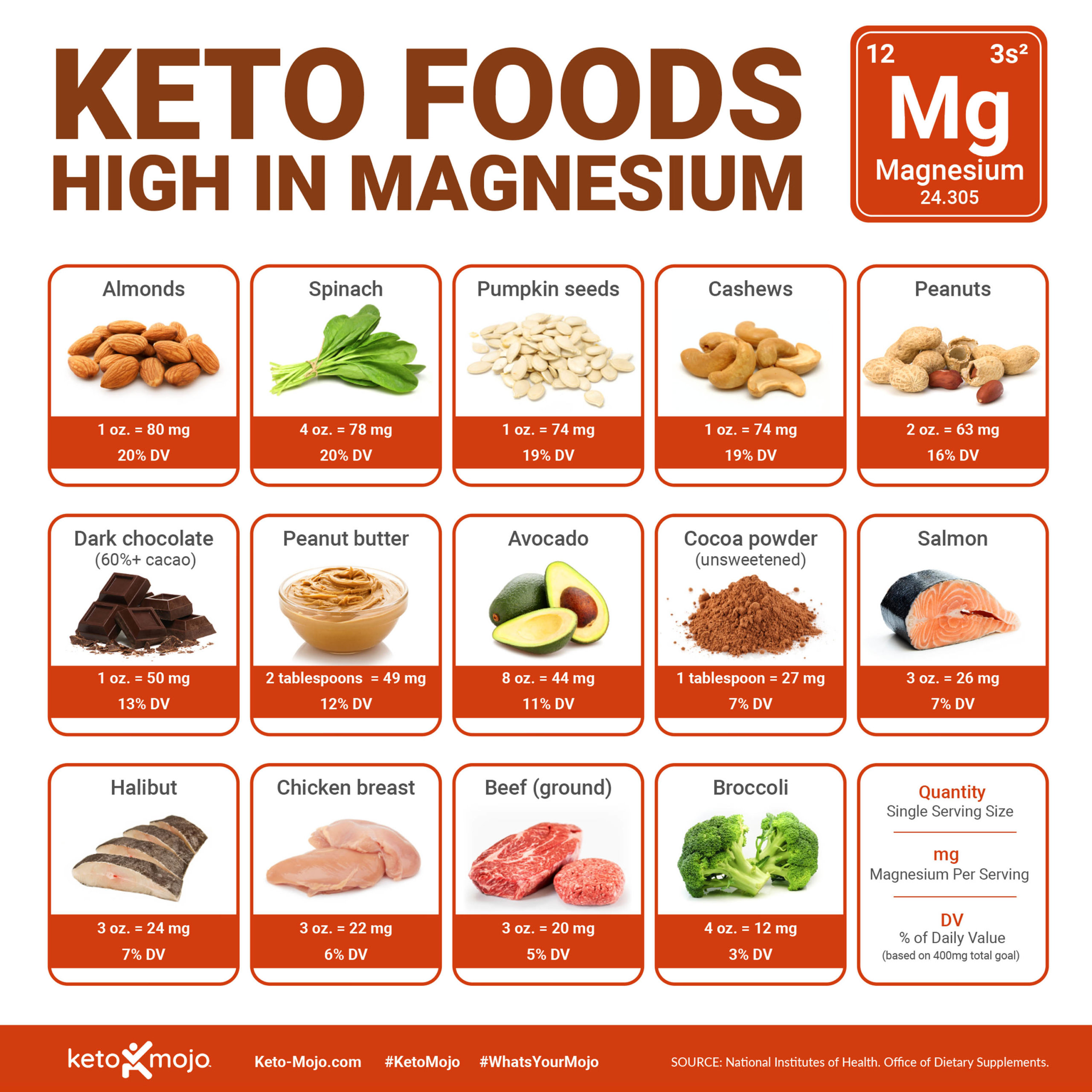
Take a look at the chart below. You’ll see there are plenty of excellent magnesium-rich foods to choose from.
Options include cashews, dark chocolate, pumpkin seeds, peanut butter, avocado, halibut and mackerel (which also provide beneficial omega-3 fatty acids), leafy greens like Swiss chard and kale, Brazil nuts, and other nutrient-dense foods shown below.
However, even if you include plenty of these magnesium-rich foods in your keto meal plan, you may still fall short, which can lead to problems.
What Happens if You Have Low Magnesium Levels?
When magnesium levels drop, you may develop symptoms like fatigue, weakness, irregular heartbeat, and constipation. Muscle cramps – especially nighttime leg cramps – are also common.
Certain groups are more at risk for low magnesium, including older adults, people with Crohn’s or celiac disease, those with type 2 diabetes, and individuals taking certain medications, as they may have more difficulty absorbing or utilizing magnesium.
Chronically low magnesium levels have been linked to an increased risk of several conditions, including insulin resistance and type 2 diabetes, cardiovascular disease, hypertension, stroke, osteoporosis, migraines, depression, ADHD, asthma, and Alzheimer’s disease.
Is Taking a Magnesium Supplement a Good Idea?
Given the potential downsides of magnesium deficiency and how common it is, it may be worth considering a magnesium supplement. Supplements can help take the guesswork out of meeting your daily needs.
That said, magnesium supplements can interact with certain medications, including antibiotics, diuretics, and oral bisphosphonates. It’s a good idea to check with your doctor before supplementing if you take any of these medications or have a medical condition, especially kidney disease. Magnesium supplements are generally well tolerated, although some people may experience side effects.
Common Side Effects of Magnesium Supplements
Magnesium can draw water into the intestines, which may lead to digestive side effects. The extent of this effect varies by form, and there isn’t a single type that works best for everyone. Individual responses differ, so some trial and adjustment is often needed. In some cases, combining different forms may provide better results.
Common side effects include nausea, abdominal cramping, and loose stools. These symptoms often indicate that magnesium is reaching the colon before it’s been fully absorbed.
If this occurs, consider reducing or splitting your dose – for example, taking half in the morning and half in the evening – to improve tolerance. If symptoms persist, switching to a different form of magnesium may be helpful.
Which Type of Magnesium is Best for You?
You won’t find pure elemental magnesium on its own. Magnesium must bind with something else to remain stable. That’s why there are so many types of magnesium supplements. Their differences stem not from the magnesium, which is all the same, but from the binding molecule used in the supplement. And what’s considered the best magnesium supplement? That depends on how you react to the binding molecules.
Here’s a brief rundown of the most popular types of magnesium supplements. Keep in mind that supplements are not as strictly monitored and regulated by the Food and Drug Administration (FDA) as drugs are , so it’s always a good idea to buy supplements from a reliable company.
Magnesium Chelates
Chelated mineral supplements bind amino acids – the building blocks of protein – to minerals. Amino acids help your body absorb minerals before negative side effects kick in. With magnesium, amino acids provide additional health benefits and lessen its laxative effects. Chelated magnesium supplements are the most bioavailable, meaning they’re easiest for your body to use and absorb. You’ll notice fewer side effects and may improve other areas of your health thanks to the amino acids. However, the complex manufacturing process means these will cost more than other types of magnesium.
The most popular magnesium chelates include:
- Magnesium glycinate, which is magnesium bound with glycine, an amino acid found in collagen. Glycine increases bioavailability, and it’s also a relaxing neurotransmitter. It may bring stress relief and better sleep quality. Magnesium glycinate typically produces less gastrointestinal symptoms than some other forms.
- Magnesium L-threonate binds magnesium with l-threonate, a sugar acid found in capers, huckleberries, and pecans. Magnesium L-threonate is the only type that crosses the blood-brain barrier. So magnesium L-threonate may support brain health. In studies, magnesium L-threonate has been shown to improve cognitive function in elderly adults and to improve sleep.
- Magnesium malate is magnesium bound with malic acid, which you’ll find in oranges, apples, and pears. Malic acid helps your cells produce and use energy, and it’s also been shown to relax tense muscles and help fibromyalgia patients manage pain. Magnesium malate tends to be less expensive than other magnesium chelates.
- Magnesium orotate is magnesium bound with orotic acid. Emerging research suggests that magnesium orotate may support gut–brain health by influencing the microbiome, though more human studies are needed.
- Magnesium taurate is magnesium bound with the amino acid taurine. In one study, supplementing with taurine helped patients with heart disease exercise longer and farther.
Magnesium Citrate
Magnesium citrate is magnesium bound with citric acid. It’s the most common form of magnesium, making it widely available, affordable, and often recommended. Magnesium citrate has been shown to help muscles relax and combat nighttime leg cramps, and emerging research suggests it may be helpful for restless leg syndrome. However, citric acid is a mild laxative, so some people experience loose stools or even diarrhea when taking this form of magnesium.
Magnesium Oxide
When magnesium binds with oxygen, it forms magnesium oxide. Magnesium oxide has the highest concentration of elemental magnesium per dose. However, it’s one of the least bioavailable sources. Because magnesium oxide isn’t easily or quickly absorbed, most of it goes right through you. When it hits your colon, it becomes a powerful laxative.
Magnesium oxide shouldn’t be an everyday supplement. You won’t absorb enough magnesium to use for anything other than constipation relief.
Magnesium Chloride
Magnesium chloride is a bioavailable form of magnesium that is well absorbed in the gastrointestinal tract and can be effective for correcting magnesium deficiency, and recent evidence suggests it may be helpful for reducing pain in those with fibromyalgia. Slow-Mag uses a slow-release, enteric-coated formulation that may improve tolerance and provide more gradual absorption.
Magnesium Sulfate
Magnesium sulfate is more commonly known as Epsom salts. People often credit Epsom salts added to a warm bath with helping to relieve muscle tension, aches, and pains. However, studies have yet to prove how this works. You can take magnesium sulfate orally, but be aware of the laxative effect.
The Final Word
Magnesium is an important mineral and electrolyte. Adequate intake may help reduce fatigue, muscle cramps, anxiety, sleep disturbances, and symptoms of the “keto flu.”
Before supplementing, check with your healthcare provider, especially if you take medications. If appropriate, start with a well-absorbed form and adjust based on your personal tolerance and response.